
Kiwis’ “can do” inspires self-piloted electric air taxi project
The story of Canterbury aviation pioneer Richard Pearse perhaps inspired what’s shaping up as another possible aircraft world first in that region.
Certainly, Zephyr Airworks chief executive Fred Reid knows the story claiming Pearse flew a heavier-than-air machine nine months before the Wright brothers at Kitty Hawk in North Carolina.
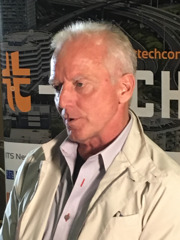
He mentioned Pearse to media in backroom interviews shortly after his T-Tech Conference talk in Auckland on March 19 about Zephyr’s self-piloted electric air taxi tests in Canterbury. Fittingly, Kitty Hawk is the parent company for Zephyr which is backed by Larry Page, Google’s founder and current Alphabet chief executive officer.
Dubbed the Cora, the autonomous vertical take-off and landing (VTOL) aircraft capable of carrying two passengers on short trips has an experimental airworthiness certificate from the New Zealand Civil Aviation Authority.
Reid, who’s had 35 years’ experience in the aviation industry – including as Lufthansa president and Virgin America founding chief executive officer – says New Zealand was selected as the best place to get Cora off the ground.
Various countries were checked off against a list of about 18 criteria, Reid says.
He says the rules are better here – including protection of intellectual property rights, that Kiwis have a “can do” attitude, are keen on sustainability and that New Zealand’s aviation is “world class”.
Reid says a team of about 125 is working on the project here and in California, currently using one aircraft in the South Island and three in the USA.
He says much can be done with computer modelling before flying the aircraft.
Cora has been designed and built from scratch, and two or three other “iterations” of the aircraft are likely before a final air taxi is developed, Reid says.
He expects to have a “conforming aircraft” in about a year.
The autonomous air taxi could help overcome city traffic issues or provide access in remote areas.
Reid says it will be quiet and with its VTOL ability can go almost anywhere, including landing on rooftop platforms.
Cora could take people across water, reach otherwise inaccessible places and requires little infrastructure or space.
Reid hopes to see between nine and 20 of the aircraft built “by this time next year”.
He expects the service will be “very affordable”.

Join the conversation