
Lamborghini pulls plug on first pure EV, cites lack of customer interest
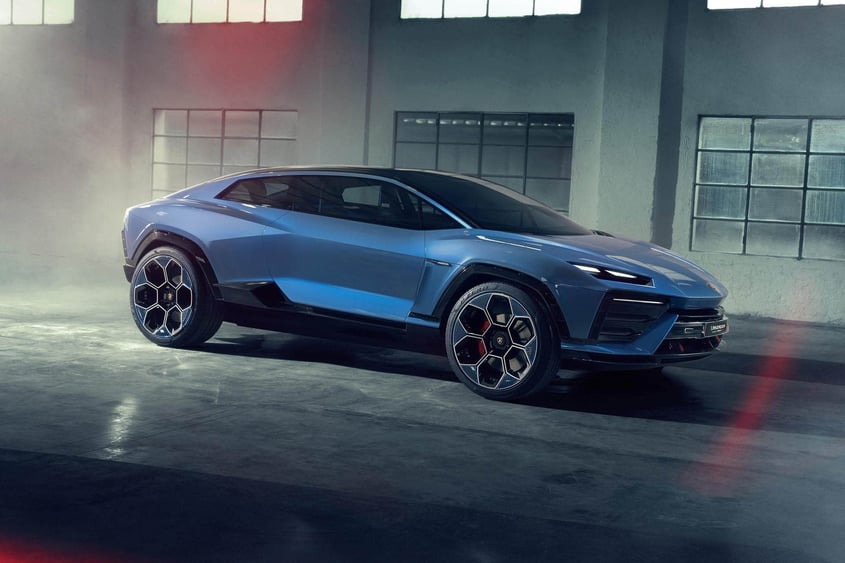
Lamborghini has abandoned plans to build its first fully electric vehicle, instead doubling down on high-performance plug-in hybrids after what it says is a lack of interest from customers.
According to a report by The Times, the electric model in question was the Lanzador, a four-seat SUV crossover concept that had been earmarked as the brand’s first pure EV.
Chief executive Stephan Winkelmann told the publication that customer appetite for a fully electric Lamborghini was “close to zero”, describing the idea of producing such a vehicle as an “expensive hobby”.
While the company remains open to electrification, Winkelmann indicated it would only pursue electric power when paired with a V8 or V12 engine, rather than as a standalone powertrain.
With the Lanzador shelved, Lamborghini will focus exclusively on plug-in hybrid models for now, with the strategy set to be reviewed again in 2030.
Winkelmann says Lamborghini buyers are still seeking an “emotional experience”, suggesting fully electric vehicles struggle to deliver the same engagement as combustion-powered models.
Despite the retreat from a pure EV, Lamborghini’s entire current line-up is now electrified in hybrid form. Models including the V12-powered Revuelto, V8-powered Urus and V10-powered Temerario all feature hybrid assistance.
The strategy appears to be delivering results, with the Italian brand selling more than 10,700 vehicles throughout 2025.
The Urus, Lamborghini’s best-selling model, had previously been slated to transition to full electric power by 2029. That plan has also reportedly been scrapped.
Winkelmann says the company could not risk such a significant shift for its top-selling vehicle and potentially lose its core customer base.
He also raised concerns about looming emissions regulations, warning of challenges ahead for the wider industry.
“We have a big task as an automotive industry. Everybody’s speaking about 2035, but there’s a big date which is very dangerous at 2030, due to the emissions. And this is something which is not clear enough, in my opinion, today.”
Join the conversation