
Leaked BYD charger specs show 1500kW power boost

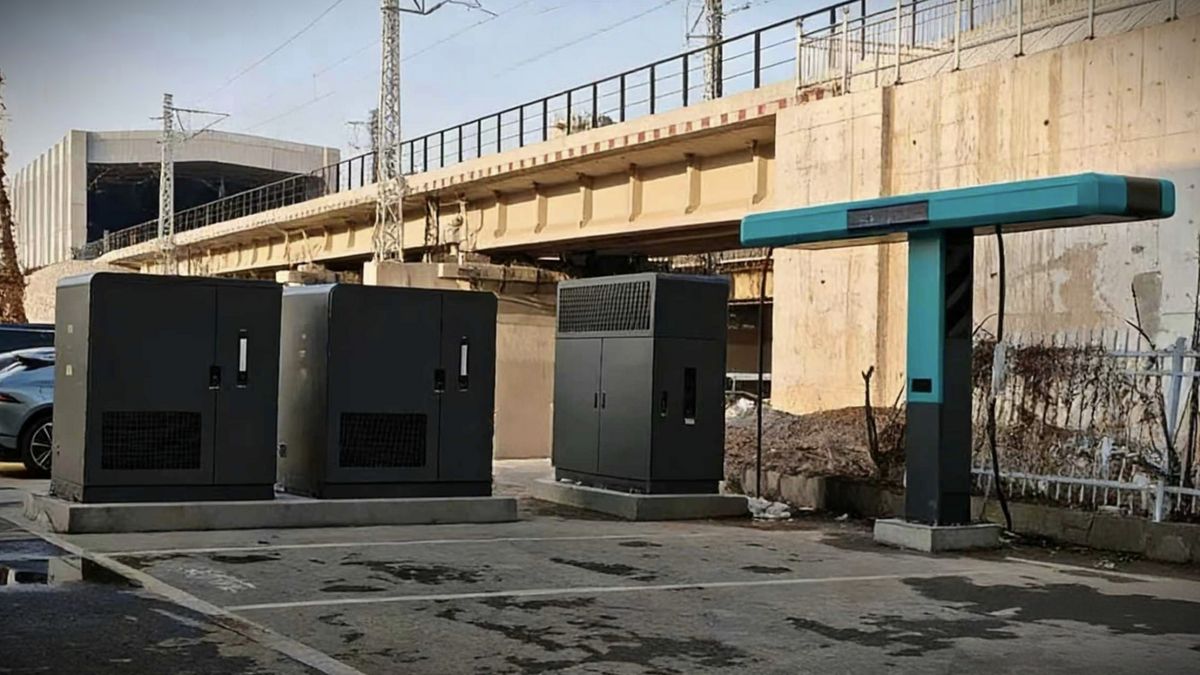
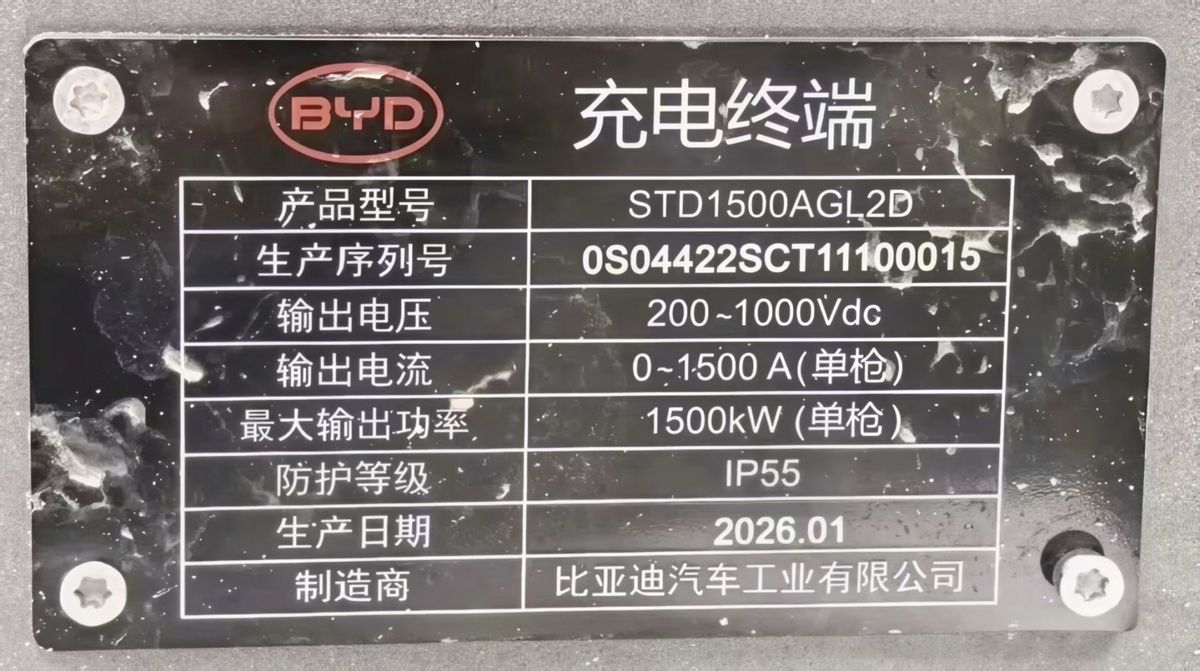
Leaked technical specifications suggest BYD’s second-generation megawatt charging system could deliver up to 1500kW of power and 1500 amperes of current, representing a 1.5-times increase over the company’s first-generation system introduced in 2025.
The unofficial specifications, cited in Chinese forums and tech blogs, indicate a maximum DC voltage of 1000V and an input capacity of 2100kW to support grid management. The leaked nameplate information suggests the system could reduce charging times for high-voltage electric vehicles (EVs) and provide enhanced support for fast-charging battery architectures.
The second-generation stations have been partially revealed online with peak power reaching up to 1360kW. The system reportedly supports 10C+ charging rates, with an estimated five-minute range gain of approximately 400 kilometres. The stations are said to be compatible with BYD’s flagship models including the Han and Tang.
Enhanced design and capabilities
The leaked specifications describe a T-shaped dual-gun design with a 1.5 square metre footprint, featuring 2 kilogram liquid-cooled cables and intelligent power distribution. Single-station energy storage has reportedly doubled compared with the first generation, enabling more than 20 vehicles to charge consecutively.
BYD launched its first-generation megawatt flash charging system on March 17, 2025, integrated with a high-voltage electric platform. That system supported a charging current of 1000 amperes, peak charging power of 1000 kilowatts, and battery pack charging capability of up to 10C, adding approximately 400 kilometres of driving range in five minutes under test conditions.
The unofficial reports indicate second-generation stations support a 500–1000V wide-voltage platform. Existing first-generation stations can reportedly be upgraded to 500kW ultra-fast charging through dual-gun and intelligent-boost modifications. A “youth version” with 200–600kW of power is also said to be in development to accommodate a wider range of vehicles.
Rapid network expansion planned
As of late 2025, BYD had deployed over 500 megawatt-class charging stations across more than 200 cities in China. The company plans further network expansion in 2026, with a three-tier layout comprising flagship, satellite, and community stations reportedly planned.
Partnerships with Xiaoju Charging and Xindiantu aim to support construction of more than 15000 stations by 2026, according to the reports.
The leaked specifications suggest the second-generation system increases electrical limits relative to the first generation. The charger is reportedly designed with IP55 protection and measures to mitigate impacts on transformers and the grid.
Competitive charging landscape
Ultra-high-power charging has become increasingly competitive in China’s EV market. Tesla’s V4 fast-charging system reaches about 500kilowatts, while Li Auto’s system delivers around 520kilowatts. Nio’s system provides approximately 640kilowatts, and Xpeng’s reaches around 800kilowatts.
Zeekr has disclosed a 1200kW charging station, while Huawei and Didi have announced megawatt-class charging solutions. These developments reflect a broader industry push toward ultra-fast charging and high-voltage electric platforms.
Chinese manufacturers continue expanding charging infrastructure alongside vehicle development. BYD’s 1000kW megawatt flash chargers have been integrated into the company’s Super e-Platform vehicles, with deployment scaling nationwide and international expansion underway.
The leaked technical details reported on social media and blogs remain unofficial and unconfirmed by BYD. Vehicle model applications, battery chemistry updates, and deployment timelines for the 1500kW system have not been verified.
For New Zealand’s developing EV charging network, such ultra-high-power charging capabilities could significantly reduce charging times and range anxiety, though local grid infrastructure and vehicle compatibility would need consideration for any future deployment.

Join the conversation