
Little for EVs in Budget 2022
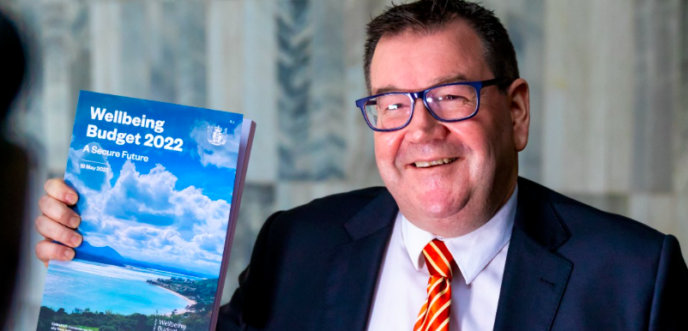
Budget 2022 released by finance minister Grant Robertson doesn’t have much for EVs.
It does allocate the $2.9 billion for the Emissions Reduction Plan (ERP) earlier outlined and focuses on the nation’s supply chain but pumps most spending into health and welfare outcomes, forecasting debt to peak at 19.9% of GDP and a return to surplus in 2023-2024.
The Government will extend existing fuel excise duty and road user charge reductions – plus the half fare public transport scheme – another two months, put $349 million toward rolling stock and rail network infrastructure, progress Auckland’s light rail and investigate the feasibility of a Manukau Harbour port.
“Through COVID we saw how major international disruptions to supply chains can disrupt Kiwi businesses, limit the availability of key goods and increase the price of everyday goods and services. That’s why we’re exploring the feasibility of Manukau Harbour as a location for a future port, and of a potential dry-dock in Northland,” says transport minister Michael Wood.
He says the Budget 2022 announcement follows the Climate Emergency Response Fund (CERF) funding announcement which saw key transport initiatives take a front seat in New Zealand’s efforts to reduce emissions.
This investment builds on existing transport investments –
• National Land Transport Fund which contributes about $4.5 billion annually to national and local roading, public transport, safety, and walking and cycling
• New Zealand Upgrade Programme is a $8.7b 10-year programme of transport projects all over New Zealand.
Prime minister Jacinda Ardern and Robertson say a cost-of-living payment will help cushion the impact of inflation for 2.1 million Kiwis, a record health investment includes the biggest increase to Pharmac’s medicines budget and that first allocations from CERF contribute to achieving the goals in the first Emissions Reduction Plan.
Budget 2022 will help build a high wage, low emissions economy that provides greater economic security, while providing support to households affected by cost-of-living pressures, they say.
It will include a new Business Growth Fund to support small and medium sized enterprises (SMEs) to grow ($100m Crown investment, alongside private banks).
“Our economy has come through the COVID-19 shock better than almost anywhere else in the world. But as the pandemic subsides, other challenges both long-term and more immediate, have come to the fore. This Budget responds to those challenges,” says Ardern.
“COVID-19, climate change and the war in Ukraine have taught us we need to build a more secure economy that protects New Zealand households from the external shocks we know are coming.
“We are reopening to the world from July 31. Tourists are already arriving and we are shaking off the remaining impacts of COVID-19. The fundamentals and trajectory of our economy are strong but we have an immediate cost of living crisis to get through.”
A temporary $27 a week payment for New Zealanders earning up to $70,000 a year, who are not already receiving the Winter Energy Payment, is included.
“These initiatives come on top of the significant lifts to main benefits, student allowances, and family tax credits implemented on April 1 and the Winter Energy Payment from May 1,” she adds.
“The landmark Emissions Reduction Plan and first allocations from the Climate Emergency Response Fund will put us on track to meet the goals of our first emissions budget, and ensure New Zealand is on course to build a low emissions economy that provides greater economic security for everyone.
“We’re investing now to make sure we’re ready and secure for what lies ahead. Be it the impact of climate change or growing pressure on health services, now is not the time to take our eye off the ball.”
Robertston says: “Budget 2022 shows the economy is expected to be robust in the near term. It is expected to strengthen from the second half of this year, with annual growth peaking at 4.2% in the year to June 2023.
“New Zealand’s economic security depends not only on addressing the near-term challenges of the cost of living, supply chain disruptions and skill shortages, but also on a clear and deliberate transition to a high-wage, low-emissions economy.
“One Budget cannot solve all of New Zealand’s challenges in one year, a longer-term approach is smarter, logical and provides more certainty. Which is why we are making long term investments in health, climate and infrastructure.”


Join the conversation