
LMR batteries expected to change EV market
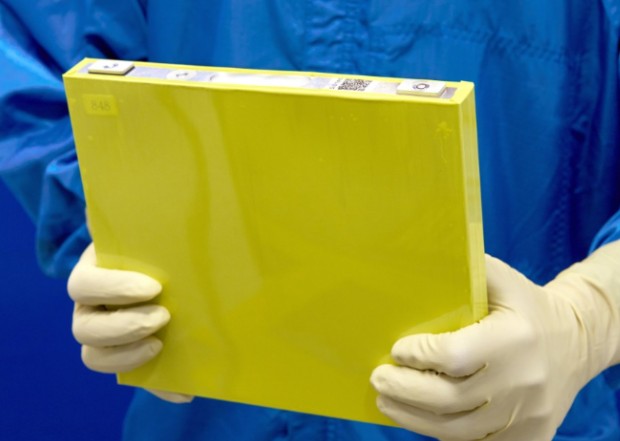
General Motors (GM) has been working on lithium manganese rich (LMR) battery technology for about 10 years since the 1990s, aiming for long range and affordability, the new batteries expected to be commercially available in 2028.
No EVs with LMR batteries are on the road as LMR has been hampered by technical barriers, in particular short battery life and voltage decay, says GM advanced battery cell engineering director Kushal Narayanaswamy.
“But GM and our collaborator LG Energy Solution have engineered solutions clearing the way for a leap forward that will offer consumers EVs with an attractive combination of long range and low cost,” he says.
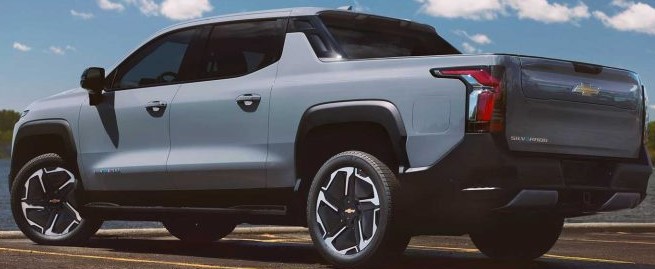
GM and LG Energy Solution announced plans to commercialise LMR battery cells in a prismatic form factor for future electric trucks and full-size SUVs.
\GM aims to be the first automaker to deploy LMR prismatic batteries in EVs.
Ultium Cells, a GM and LG Energy Solution joint venture, plans to start commercial production of LMR prismatic cells in the US in 2028.
GM EV trucks and SUVs use nickel manganese cobalt aluminium oxide (NMCA) and by integrating LMR battery technology and the manufacturing and space efficiency benefits of prismatic cells, GM aims to offer more than 400 miles 643.7km) of range in an electric truck while achieving significant battery pack cost savings, says Narayanaswamy.
“GM has been researching lithium-ion battery cells with manganese-rich cathodes since 2015, with our work accelerating in 2020. By the end of 2024, we had coated about one ton of LMR cathode in our Wallace Battery Cell Innovation Centre, testing hundreds of large format prismatic cells in 18 different prototype varieties and three different cell dimensions, testing them to the equivalent of 1.4 million miles (2.25 million km) of EV driving.”
Narayanaswamy says the chemical composition of LMR cells is about 35% nickel, 65% manganese, and virtually no cobalt, so much less expensive.
“The chemistry also lends itself well to larger cell sizes, which further reduces system cost, with fewer connective and structural elements in a battery pack.
“GM estimates that our new LMR cells will get 33% more energy density at a comparable cost than LFP, or lithium iron phosphate, another popular lower-cost EV battery chemistry.”
LMR will haved “prismatic” cells, which are rectangular in shape, rather than the “pouch” cells at the heart of current high nickel packs, says Narayanaswamy.
“That makes them substantially more efficient to package in full-scale trucks and SUVs.
“Prismatic cells reduce both the number of required parts and the percentage of non-active materials,” he says.
“More specifically, prismatic cells reduce battery module components by 75% and total pack components by 50%.
“We’ve worked with our suppliers to optimise the materials in our LMR cells, adding proprietary dopants and coatings, along with particle engineering, process innovations, to achieve the right energy density and arrangement of battery materials inside the cell to keep them stable.
“The result is that our new LMR cells can match the lifespan of current generation high-nickel cells, with comparable performance but much lower cost.”
LMR will make it possible for GM to offer EVs with premium range at considerably lower cos, says Narayanaswamy.
Join the conversation