
Meridian reports $429m profit

Meridian Energy has reported an annual increase in net profit after tax from $95 million to $429m.
It says it has lifted financial performance and laid foundations for growth.
Meridian Energy says operating cash flows are $667m for the year ending June 30, 2024, up from $509 million the previous year.
The growth in net profit after tax was influenced significantly by net gains on hedge instruments of $249 million in the 2024 financial year, the gentailer says.
In the prior year the company recorded net losses on hedge instruments of $351 million.
EBITDAF was up 16% to $905m and underlying net profit rose 14% to $359m.
“This is a strong and improved operating result that allowed us to invest $349 million in new and existing generation assets during the year,” says Meridian Energy chief executive Neal Barclay.
Meridian’s board declared a final ordinary dividend of 14.85 cents per share (cpos), bringing the total ordinary dividends declared in FY24 to 21 cps, while the board has approved continuation of the Dividend Reinvestment Plan at a 2% discount.
The company notes that while the operating result for the last financial year was strong the operating environment shifted dramatically during May as a drought emerged.
Inflows into Meridian’s hydro catchments from May 2024 through to mid-August 2024 have been the lowest on record and, as a result, the 2025 financial year currently looks to be far more challenging, it says.
“Record low inflows have combined with a shortage of gas and unseasonally low wind, causing wholesale prices to lift materially,” says Barclay.
“As a result, Meridian called on hedge arrangements to ensure our hydro lakes were managed within consent conditions to maintain security of supply.
“The wider sector took several steps to address the situation, including exercising demand response options, buying gas from Methanex for electricity generation and securing access to contingent hydro storage, should we need it,” he says.
“These actions have already resulted in wholesale prices reducing by more than half from their peaks, although they are still sitting above $300/MWh.”
Less than 0.01% of Meridian’s customers have been impacted by these wholesale prices because the company offers fixed prices to all customers.
Meridian has also taken steps to look after its larger commercial and industrial customers rolling off their existing contracts, by offering to extend their current pricing through to November 1,2024.
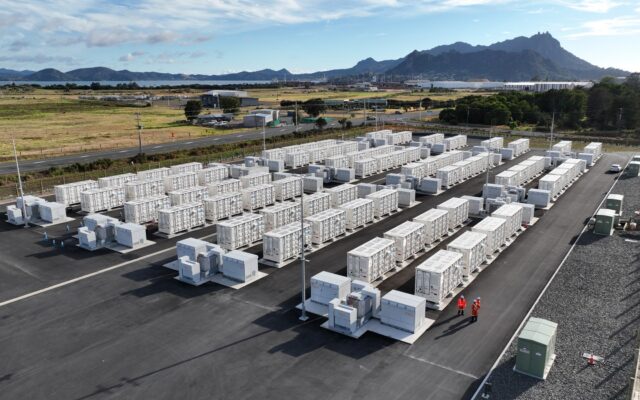
Barclay says the year has been one of milestones, including 20-year agreements with New Zealand Aluminium Smelters (NZAS), the commissioning of Harapaki Wind Farm, construction underway on its first grid scale battery and the development of new strategies across retail and generation businesses.
Meridian grew customer connections by 2% and customer sales volume (GWh) by 4% during the year.
“We remain the country’s largest supplier of retail electricity, with sales of more than 9500GWh,” says Barclay.
“We are testing new ways to support customers to further electrify their energy use and pass value onto customers where they can manage their demand flexibility and avoid the electricity system’s peak demand periods.”
Meridian’s Energy Wellbeing Programme was expanded this year with the goal of helping 5000 Meridian and Powershop households out of energy hardship through a $5 million investment, helping more than 1400 households so far to improve energy efficiency and sustainably manage their bills.
Meridian says it remains focussed on its goal to develop enough new renewable energy to support the country’s transition to a resilient net zero economy and retain a generation market share of at least 30%.
“We have close to 700MW of wind, solar and battery projects at the advanced stage of design and close to being consented, and we expect to invest more than $3 billion in new renewable energy by 2030, that’s the equivalent of more than 5% of current system demand,” says Barclay.
“We will need all of that because we estimate that for Meridian to meet our share of the country’s renewable energy needs by 2050, we will have to build the equivalent of 20 Harapaki-sized renewable generation assets.”
The Southern Green Hydrogen project has been put on hold as Meridian says the economics of producing green hydrogen at scale in New Zealand have become more challenging.
A prolonged outage of one of the transformers at West Wind Farm in Wellington has reduced capacity to 98MW from the usual 143MW, says Barclay.
“We expect to have this resolved by October 2024.
“We also have two Manapouri units parked due to transformer failures. One replacement transformer will be delivered late this calendar year and a second is due late 2025.”


Join the conversation