
MG eyes Seagull with affordable new electric hatch
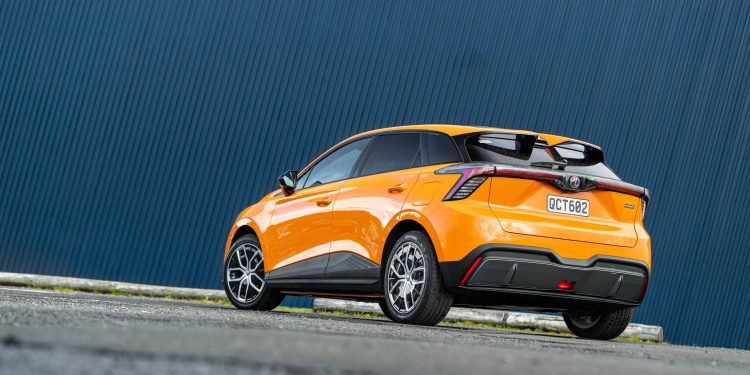
MG is preparing to go head-to-head with BYD in the ultra-affordable EV market, with a new compact hatchback model unveiled via regulatory filings in China.
Internally referred to as the MG2, the upcoming electric city car is aimed squarely at buyers who want zero-emission commuting without the premium price tag. Pricing is expected to land well below NZD $25,000 in China, putting it in direct contention with the BYD Seagull — a model already making waves internationally for reshaping what a sub-$30K EV can be.
The MG2 is based on the same modular platform underpinning the MG4, but with shorter proportions and a tighter footprint suited for dense urban areas. Despite its small size, it’s expected to feature fast-charging capability and a usable real-world range in the 250–350 km bracket depending on variant. Leaked documents suggest two battery options will be offered, with LFP chemistry standard.
Inside, the design is expected to follow MG’s recent direction — clean, minimal and digital-focused, with a large central touchscreen and digital driver display. It may also offer features like adaptive cruise control and 360-degree cameras on higher trims, making it a strong contender for first-time EV buyers.
While no formal launch date has been confirmed, the MG2 is likely to hit Chinese showrooms later this year before expanding to other markets. MG has not yet confirmed right-hand-drive production, but if the MG4 is any precedent, New Zealand could be on the radar.
If the MG2 does make it here, it could shake up a segment that’s been dominated by either used EV imports or higher-priced newcomers. As the Seagull edges closer to a potential NZ debut, MG’s new contender could set the stage for a battle of the budget EVs.
EVs clock up more miles than diesels in latest UK fleet data
Electric vehicles are now officially the high-mileage champions of the UK car fleet, with recent data showing they’re outpacing diesel models in total annual kilometres driven.
According to new analysis from the UK’s Driver and Vehicle Standards Agency (DVSA), battery electric vehicles (BEVs) recorded an average of 13,500 miles (21,725 km) in 2023 — more than any other powertrain. In comparison, diesel models trailed behind for the first time, marking a major milestone in the EV transition.
While petrol-powered cars remain dominant in terms of total registrations, they clocked up far fewer kilometres on average, and hybrids sat somewhere in the middle.
Fleet operators, rideshare drivers, and long-distance commuters are key contributors to the trend. The Tesla Model 3 topped the charts with an astonishing average of 19,000 miles (30,500 km) per vehicle — underlining its appeal not just as a tech icon, but as a durable, low-cost option for people who really drive.
Experts point to a mix of lower maintenance requirements, rising fuel costs, and expanding charging infrastructure as reasons EVs are proving viable even for intensive daily use. Tax incentives for company car drivers and zero-emissions zones in urban centres have also nudged fleets toward full electrification.
The data contradicts persistent myths about EVs being suitable only for short trips or city commutes. With growing battery ranges and improved real-world reliability, many drivers are finding that EVs now meet — and often exceed — the demands of high-mileage life.
It’s also a signal to policy-makers that uptake is accelerating not just among early adopters but within the broader professional driving community. New Zealand’s fleet sector, which often follows UK trends with a lag, may see similar changes in coming years — especially as more affordable EVs enter the market and charging networks expand.
Subaru goes all-in on EVs — but on its own terms
Subaru is no longer sitting on the EV sidelines. The traditionally cautious brand is now committing to a major electric rollout — but it’s doing so with a strategy that’s uniquely its own.
At a recent shareholder briefing, Subaru President Atsushi Osaki laid out an ambitious vision: four new electric SUVs by the end of 2026, a dedicated EV factory by 2027, and a goal of producing 600,000 battery electric vehicles annually by 2030. That would represent more than half of Subaru’s total planned global output.
It’s a dramatic pivot for a company known more for its boxer engines, rugged wagons, and loyal rural customer base than for cutting-edge electrification. But as emissions regulations tighten globally — and as key partners like Toyota accelerate their own EV efforts — Subaru is moving from reluctant participant to proactive player.
Subaru’s first EV, the Solterra, was developed in partnership with Toyota and launched globally in 2022. While not a runaway hit, it gave the brand its first taste of the battery electric market. Lessons learned from the Solterra will likely inform Subaru’s next-generation electric models, which are being designed in-house on a dedicated platform.
According to Osaki, future EVs will stay true to Subaru’s DNA: all-wheel drive, capability, and safety will remain central, even as propulsion goes electric. “Subaru customers care deeply about reliability and control. We want to bring those values to the EV space in a way that feels authentic to our brand,” he told investors.
Interestingly, Subaru has been candid about not rushing into EVs just for the sake of it. Executives have expressed concerns about infrastructure readiness, battery sourcing, and maintaining profit margins in a cost-intensive segment. But with global automakers increasingly judged by their electric strategies, Subaru knows it can’t afford to wait much longer.
There’s no confirmation yet which of the four upcoming EVs will be offered in New Zealand, but the local distributor has shown interest in the electrification roadmap. The Solterra is already available here in small volumes, and a broader lineup could give Subaru the chance to regain relevance in a market shifting rapidly towards low-emissions vehicles.
Whether Subaru’s late but focused approach will resonate with buyers remains to be seen. But if it can blend electrification with its core identity, it may yet find success with a new generation of outdoorsy, climate-conscious drivers.
Model Y turns the tide with big June for EV sales
New Zealand’s EV market has been under pressure in 2024, but Tesla’s Model Y delivered a much-needed jolt in June — leading battery EV registrations by a wide margin and hinting at a possible rebound.
According to official Waka Kotahi data, the Model Y topped the BEV charts with 408 units sold in June, accounting for nearly one-third of all new electric vehicle registrations for the month. It was one of the few standouts in an otherwise quiet period for electrification, following the removal of government rebates and softening economic conditions.
The BYD Atto 3 followed with 152 units, while MG’s popular MG4 recorded 129 registrations. Other notable performers included the Kia EV6 (54) and Polestar 2 (46). But none came close to the Model Y’s commanding lead, driven in part by fresh inventory arrivals and renewed buyer interest.
Overall BEV sales were down year-on-year but up compared to May, suggesting that pent-up demand may still exist for certain models, especially those with strong brand recognition or recent price cuts.
Industry watchers say Tesla’s surge in June underscores the continued importance of supply timing in the local market. “When vehicles land and dealers can deliver, the numbers move quickly — especially for a model with broad appeal like the Model Y,” one distributor source told EVs & Beyond.
While EV adoption remains sluggish compared to 2023, the June data suggests the market hasn’t flatlined. Strong performers like the Model Y could help keep momentum alive as brands prepare for new model launches and adjust pricing strategies in the post-rebate landscape.
The second half of the year will be crucial. If models like the upcoming Sealion 6, the next-generation Leaf, or potential arrivals like the BYD Seagull and MG2 enter the market, the tide may turn further in favour of electrification.
For now, June was a win — and the Model Y proved that the right vehicle, at the right price and time, can still charge ahead.

Join the conversation