
Minister told national EV charging strategy needed urgently

Drive Electric members have told transport minister Michael Wood that plans for a national EV charging strategy need to be accelerated in parallel with the growth of the national electric fleet, as 20% of new vehicles sold every month now have a plug.
Drive Electric members have told transport minister Michael Wood that plans for a national EV charging strategy need to be accelerated in parallel with the growth of the national electric fleet, as 20% of new vehicles sold every month now have a plug.
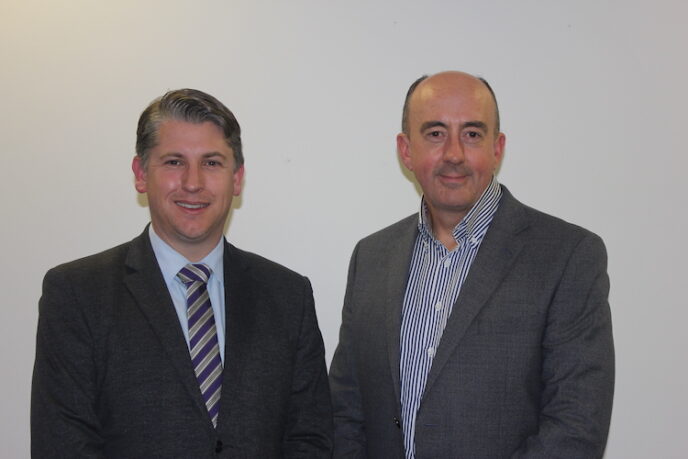
The Drive Electric board hosted minister Wood at its first members evening of 2022, where he presented his report and findings from EVS35, the international electric vehicle symposium in Oslo, Norway.
Audi New Zealand general manager and Drive Electric board member Dean Sheed thanked Wood for coming to the event and for his focus and outcomes for the electric vehicle industry. Sheed says 45% of new car buyers are now considering an EV as their next purchase.
After the minister’s presentation, he joined a panel of EV experts including Hyundai New Zealand executive Conrad Healy, ChargeNet chief executive Richard Dellabarca, and Zilch co-founder Kirsten Corson, for a question and answer session moderated by Powerco business development general manager Eric Pellicer.
The most urgent question from the floor to the minister was the timetable for the proposed national charging strategy which is being jointly administered by the Ministry of Transport and the Energy Efficiency and Conservation Authority (EECA).
Jolt country manager Chris Monaghan commented to the floor that a national plan for the implementation of charging infrastructure needs to happen as soon as possible.
“We are finding that there is quite a different spectrum of knowledge and understanding of electric vehicle charging infrastructure amongst local bodies in New Zealand,” Monaghan says.
Wood commented that work on a national charging strategy by EECA and the Ministry of Transport is ongoing but did not outline a timeframe. He did, however, confirm that energy minister Megan Woods will be announcing a national energy strategy in October that would include hydrogen.
The transport minister says he believes that currently 75% of the national highway network has a fast charger every 75km, most of which has been funded by EECA, and provides a good base from which to start.
Wood likened the roll out of a national electric vehicle charging infrastructure to that of a national broadband network, that it would present many challenges and was not a quick fix.
ChargeNet chief executive Richard Dellabarca echoed the sentiments of Monaghan and the task which both of their organisations are facing in the current market.
“The petroleum industry took 100 years to implement its refuelling network and we are trying to replicate this in a decade,” Dellabarca says.
He says one 50kW charger and two car parks is no longer an efficient or practical model for ChargeNet customers wanting to charge up their EVs and that the current network is already at capacity.
To solve the issue of the consumer experience we need to significantly upscale our commercial capacity,” Dellabarca says.
“Going forward we will need to install two to four 150kW chargers with up to six carparks to meet demand.”
The Drive Electric board hosted minister Wood at its first members evening of 2022, where he presented his report and findings from EVS35, the international electric vehicle symposium in Oslo, Norway.
Audi New Zealand general manager and Drive Electric board member Dean Sheed thanked Wood for coming to the event and for his focus and outcomes for the electric vehicle industry. Sheed says 45% of new car buyers are now considering an EV as their next purchase.
After the minister’s presentation, he joined a panel of EV experts including Hyundai New Zealand executive Conrad Healy, ChargeNet chief executive Richard Dellabarca, and Zilch co-founder Kirsten Corson, for a question and answer session moderated by Powerco business development general manager Eric Pellicer.
The most urgent question from the floor to the minister was the timetable for the proposed national charging strategy which is being jointly administered by the Ministry of Transport and the Energy Efficiency and Conservation Authority (EECA).
Jolt country manager Chris Monaghan commented to the floor that a national plan for the implementation of charging infrastructure needs to happen as soon as possible.
“We are finding that there is quite a different spectrum of knowledge and understanding of electric vehicle charging infrastructure amongst local bodies in New Zealand,” Monaghan says.
Wood commented that work on a national charging strategy by EECA and the Ministry of Transport is ongoing but did not outline a timeframe. He did, however, confirm that energy minister Megan Woods will be announcing a national energy strategy in October that would include hydrogen.
The transport minister says he believes that currently 75% of the national highway network has a fast charger every 75km, most of which has been funded by EECA, and provides a good base from which to start.
Wood likened the roll out of a national electric vehicle charging infrastructure to that of a national broadband network, that it would present many challenges and was not a quick fix.
ChargeNet chief executive Richard Dellabarca echoed the sentiments of Monahan and the task which both of their organisations are facing in the current market.
“The petroleum industry took 100 years to implement its refuelling network and we are trying to replicate this in a decade,” Dellabarca says.
He says one 50kW charger and two car parks is no longer an efficient or practical model for ChargeNet customers wanting to charge up their EVs and that the current network is already at capacity.
To solve the issue of the consumer experience we need to significantly upscale our commercial capacity,” Dellabarca says.
“Going forward we will need to install two to four 150kW chargers with up to six carparks to meet demand.”


Join the conversation