
Mobile EV chargers part of US$40b industry

Mobile charging can help charging operators quickly build up the infrastructure or test for the best locations with the flexibility to relocate easily with no additional cost.
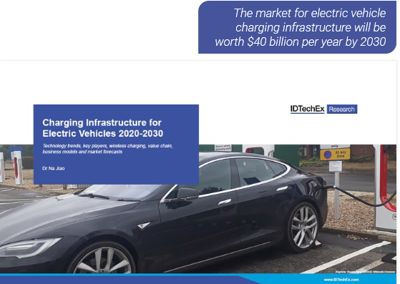
The EV charging infrastructure market will grow at 24% compound annual growth rate (CAGR) in the coming decade and reach US$40 billion annually by 2030.
So says IDTechEx technology analyst Dr Na Jiao following the release of IDTechEx report Charging Infrastructure for Electric Vehicles 2020-2030.
Public charging infrastructure, especially fast charging, is very capital intensive and the payback time is long, she adds.
This has brought concerns for customers that their investment in certain charging solutions might become obsolete sooner than expected.
Instead of EV drivers looking for charging stations, the mobile charger comes to the vehicle to charge it, like one EVtalk
featured.
“For charging network operators, it is not easy to decide the best locations to install charging infrastructure and there are risks that the charging stations become underutilised, a common issue found in China and Europe,” Jiao says.
 “Also, it takes months or more to install charging stations, especially for DCFCs, due to permitting requirements and any capacity upgrades that must be negotiated with the local utility.”
A mobile EV charger normally comprises energy storage devices (usually batteries) in the form of portable chargers, trolleys, vans and even robots.
“Through the use of mobile energy storage for charging, the cost and complexity of the charging infrastructure can be significantly reduced, especially for restricted parking areas. It also provides a flexible charging solution for big events where there is no fixed charging infrastructure for temporary charging.”
Mobile charging could be useful for corporate and fleet customers to avoid high upfront cost of installing fixed charging infrastructure, according to the report.
Although it is expected to remain niche in terms of applications, it is an important complement to stationary charging infrastructure, Jiao says.
Mobile charging, especially robots, could also charge autonomous vehicles (AVs) in the future.
By 2030 more than 100 million plug-in EVs will be on the road globally, including passenger cars, buses, trucks and vans which are the most relevant sectors to consider for EV charging infrastructure.
Private charging will remain dominant in the coming decade, and the public charging sector is expected to grow rapidly to meet charging demand, especially in countries like China where many EV drivers don’t have access to private charging.
EV fleets such as buses and trucks require very different charging infrastructure and represent huge opportunities for developing that, Jiao says.
Although electric fleet charging represents less than 5% of the total charging infrastructure in volume, it constitutes more than 30% of the total market value of the charging industry, reflecting the much more expensive charging infrastructure needed for fleet charging.

Join the conversation