
More electric Fords in the works, including Puma and Transit Custom

Following on from the Mustang Mach-E and forthcoming E-Transit, Ford has announced that it will be adding seven more electric vehicles to its European line-up by 2024.
The seven-strong list consists of three new passenger vehicles and four new commercial vans, with several heavy hitters included in the line-up.
One of the biggest inclusions is a plug-in Puma compact crossover. While the Puma isn’t quite a household name in New Zealand, it’s Ford’s most popular model in Europe.
The brand has also confirmed it plans to build an “all-new electric vehicle, medium-sized crossover”, which could shape up as a cousin to the Escape. It’s set to share the same MEB platform as the Volkswagen ID.4. Its name will be unveiled later this year, with production following in 2023.
The last of its passenger cars on the roster was not detailed in the brand’s release.
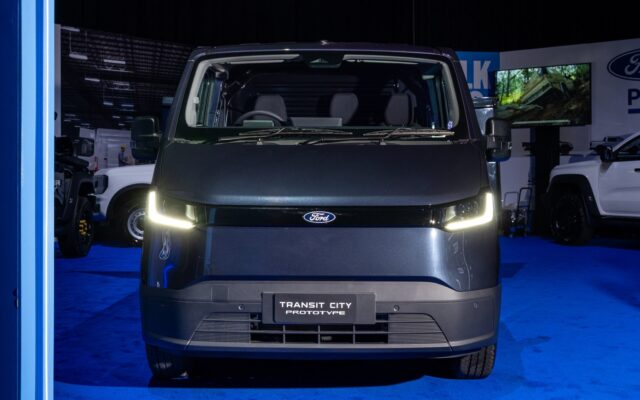
All four electric commercial vehicles will be variations of Transit. Two are versions of the compact European-market Transit Courier, and the other two are versions of the Transit Custom; the entry-level one-tonne van and the Tourneo.
The latter could be big news for the New Zealand market. Ford’s local arm has already confirmed the full-size E-Transit for our market. Adding an electric Transit Custom could give the group a significant leg-up on the model’s key rival, the Toyota Hiace.

Speaking to EVs&Beyond, a Ford New Zealand spokesperson confirmed that there’s “no news for NZ” regarding a local launch for any of the aforementioned models. Nevertheless, we expect that each will eventually be confirmed for local sale.
The news comes after Ford recently announced it would be splitting its business into two groups, with electric vehicle development to sit under the new ‘Ford Model e’ umbrella.
In order to deal with the additional production load the new models will bring, Ford has upped its investment in the Ford Cologne Electrification Centre. It expects the plant to be producing 1.2million EVs over a six-year period. It expects to be selling more than 600,000 EVs a year by 2026.
Ford also plans to increase investment with its Craiova plant in Romania. This is where the electric Puma will be built.
Lastly, the brand has also confirmed big investment in battery production in Turkey, via an agreement with Koç Holding. Pending some final approvals, the Koç Holding is set to start building high nickel NMC cells for Ford by the middle of the decade.
“I am delighted to see the pace of change in Europe – challenging our entire industry to build better, cleaner and more digital vehicles. Ford is all-in and moving fast to meet the demand in Europe and around the globe,” said Jim Farley, Ford president and CEO.
“This is why we have created Ford Model e – allowing us to move at the speed of a start-up to build electric vehicles that delight and offer connected services unique to Ford and that are built with Ford-grade engineering and safety.”
“Our march toward an all-electric future is an absolute necessity for Ford to meet the mobility needs of customers across a transforming Europe,” said Stuart Rowley, chair, Ford of Europe.
“It’s also about the pressing need for greater care of our planet, making a positive contribution to society and reducing emissions in line with the Paris Climate Agreement.”
Join the conversation