
More Mercedes-Benz EQ Power coming
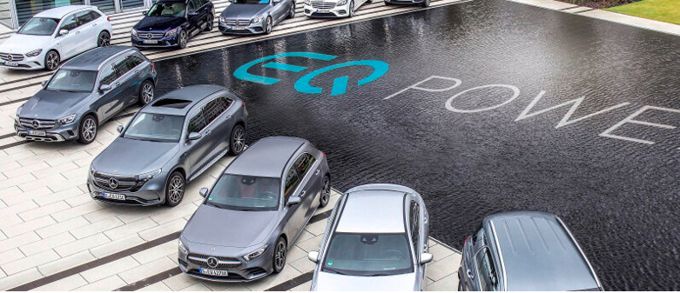
At least 20 different Mercedes-Benz model variants will be plug-in hybrids by the end of 2020 under the company’s EQ Power project.
Parent company Daimler says PHEVs represent what is perhaps the key bridging technology in the move to all-electric with large lithium-ion batteries ensuring electric operating ranges are more than sufficient for most daily journeys.
Mercedes-Benz intends rolling out the technology across its entire range – from the A to the S-Class, from the GLA to the GLE the combustion engines are being given electric supporters which can be charged at home, work or from the public network.
Mercedes-Benz Research used methods such as the EQ Ready App to show a purely electric range of 50km is sufficient for 90% of all journeys.
The structure of the hybrid components enables Mercedes-Benz to do without a classic 12V starter, as only the electric engine is used for starting and boosting the internal combustion engine (ICE).
Compact class PHEVs have a 77km electric range (NEDC), 75kW output, 160kW system output, 450Nm system torque and 140km/h electric top speed (235km/h total) and 0-100 km/h in 6.6 seconds acceleration (A-Class Compact Saloon).
A lithium-ion battery with an overall capacity of about 15.6 kWh can be fully charged from 10% at a 7.4kW wallbox with AC within an hour and 45 minutes and DC 25 minutes.
The 150kg water-cooled batteries are supplied by the fully owned Daimler subsidiary Deutsche Accumotive.
Third-generation Mercedes-Benz EQ Power PHEVs have batteries with advanced cellular chemistry, the switch from lithium-iron-phosphate (LiFePo) to lithium-nickel-manganese-cobalt (Li-NMC) allowing cell capacity to be increased from 22 to 37Ah.
As a result, battery packs have a more compact design, with boot capacity and occupant space benefits, the company says.
With its a 31.2kWh battery capacity the GLE 350 de reaches 100km electric range (NEDC) and allows fast recharging via its Combo vehicle socket using AC and DC charging (20-30 minutes).
As an option, with the Mercedes me Charge service Mercedes-Benz PHEV drivers have access to an extensive charging network. The Mercedes-Benz User Experience (MBUX) system’s speech recognition enables a search for charging stations in the vicinity or along the chosen route.
The EQ Power models support the driver in efficient driving with an intelligent and route-based operating strategy. It recommends the electric driving mode where it makes the best sense in each case. The ECO Assist is like a driver coach and helps save electricity and fuel, cutting consumption by up to 5%.
The company says that in spite of the larger ‘CO2 backpack’ due to the higher energy use in production, the plug-in hybrid saves a large amount of CO2 across the entire life cycle and in the best-case scenario it achieves only about 45% of the total emissions of a comparably powerful, conventionally driven model.

Join the conversation