
New biosecurity measures to tackle lengthy vehicle import delays
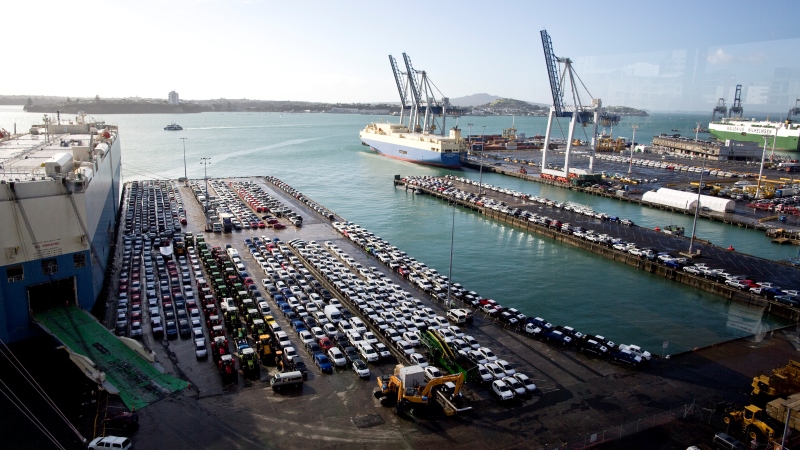
Biosecurity New Zealand will no longer require vehicles to be held on a vessel for further inspection if contamination is detected within the vehicle itself as part of major changes to the import trade.
Importers (which includes those bringing EVs from Japan) will instead have the option of having the entire consignment treated outside the port in an approved transitional facility in order to tackle lengthy delays and disruptions.
The initiative follows months of discussions between the Ministry for Primary Industries (MPI), ports, shipping companies, transport operators and the vehicle industry as it grappled with the impact of COVID-19.
Seven MPI officers were forced to return to New Zealand from Japan in March last year as a result of the pandemic. It resulted in all verification inspections of arriving vehicles now taking place at local ports with most at Ports of Auckland.
It has added to costly delays, with one RoRo vessel berthed at Ports of Auckland for nine days as its whole cargo of around 1800 vehicles was inspected. By comparison, this would usually take one day to unload.
Hold-ups have been the result of vehicles arriving with seed and pine needle contamination.
Imported Motor Vehicle Industry Association (VIA) chief executive David Vinsen says there were many “heated discussions” with huge pressure on the industry to find a solution.
Vinsen says he congratulates the industry for finding “a very pragmatic response” to the situation it faced.
“Not only the outcome but the process … people have listened,” he says.
He says the disruptions “caused a lot of tension and anxiety” for many but the new approach, which will roll out “progressively”, is a great step forward.
Biosecurity NZ central and south regional commissioner Steve Gilbert says following discussions with VIA and industry representatives, there “was commitment to making the system stronger and working together to introduce a range of changes to the clearance approach”.
The changes will begin on May 1 and will fully transition on July 1 which includes:
- Biosecurity NZ will no longer require vehicles to be held on a vessel for further inspection if contamination is detected within the vehicle itself in a consignment. The importer will instead have the option of having the entire consignment treated outside the port. This will allow vessels to move through the port quicker.
- Biosecurity NZ has worked with the Japan-based cleaning and inspection operators to establish approved plans covering how onshore treatment will occur.
- The Japan-based operators are committed to ensuring that vehicles arriving in New Zealand are free of any biosecurity risk material and continue to take every opportunity to improve their systems.
- Biosecurity NZ will assess each consignment on its merits and determine what action is to be taken if non-compliance is found. This action is dependent on a number of factors such as the non-compliance material, and how it can be best treated when managing the biosecurity risk.
The approved transitional facilities will be based in Auckland, Wellington, Nelson and Christchurch and it’s expected transport and logistics companies will step up to provide this space.
Gilbert says there are a number of proposed facilities that Biosecurity NZ is expecting applications for. They will then be run by an MPI-approved transitional facility operator.
In Auckland, there more than 300 inspectors who are deployed across a range of pathways depending on biosecurity or logistical requirements, he says.
“Biosecurity New Zealand will continue taking samples of vehicles as they arrive to provide assurance the vehicles continue to meet requirements.
“Where Biosecurity New Zealand has assessed the risk as high, for example due to live stink bugs, current measures including controlled discharge, heat treatment and use of detector dogs may be used.
“There are strict controls when general contaminants are found and approved transitional facilities will have a range of measures for decontamination when required,” Gilbert says.
Ports of Auckland spokesperson Julie Wagener says the industry has worked hard to accommodate the changes to the inspection process and manage the extended time vehicles are held at the port since COVID-19.
The current process MPI put in place in 2020 “was required but was not designed as a long term operating model,” she says.
“The port is actively working with MPI and industry stakeholders to support a sustainable vehicle inspection process going forward and welcomes the improvements proposed.”
Meanwhile, Chris Carr, director of transport company Carr & Haslam, also welcomes the move which will see vehicles handled in the same way as containers.
“For those vehicles that fail it will mean extra transport, expense, and handling, and delays. The clear incentive is for the cars to be prepared correctly in Japan.
“I think it is a realistic and safe response to the current situation. If the cars are prepared correctly in Japan then there should be little hold up.
“My guess is that the classic 80/20 rule will apply, and while most will be cleared, some will be sent for rectification at an approved transitional facility,” Carr says.

Join the conversation