
Patent filed for LFP battery cell for more range

A patent application for a very large format (VLF) cell has been filed by Advanced Cell Engineering (ACE) with the US Patent and Trademark Office.
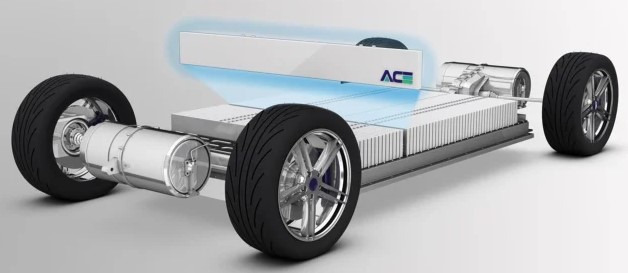
The filing represents a key milestone in the company’s “Project Magnus” in which ACE will finalise cell design and chemistry for a highly efficient one metre cell-to-pack prismatic cell, aiming to couple it with ACE’s patented advanced lithium iron phosphate (LFP) chemistry to enable EV manufacturers to build vehicles offering greater range.
A developer and licensor of next-generation high energy density battery cell technology, ACE says its “advanced LFP” offers significantly higher energy density in any cell format than LFP offerings on the market now.
When used in the VLF cell, ACE’s advanced LFP technology will achieve even greater energy density due to the cell’s very efficient design, the company adds.
“We’re relentlessly focused on driving the EV battery market forward,” says ACE president Tim Poor.
“Today’s LFP technology has an energy density of about 160Wh/kg, while our patented advanced LFP chemistry has an energy density of up to 200Wh/kg.
“The unique architecture of a new one-metre VLF cell will increase energy density even further – to about 250Wh/kg,” he explains.
“ACE’s technology will reduce battery costs and increase EV range – something that’s important to both EV makers and drivers.”
The company says its VLF battery cell will reduce the size, weight, and complexity of an EV’s battery system.
While today’s EVs contain thousands of small cells assembled into a number of modules, which are in turn assembled into a battery pack, ACE says its VLF cell will eliminate the need for the module structure by integrating 80-100 one-metre prismatic cells directly into the battery pack which is then installed into a vehicle’s chassis.
ACE expects the cell design to be available for licensing in early 2023 and it believes the VLF cell will outlast the lifespan of the EVs it powers.
The company develops and licenses advanced lithium-ion battery cell technologies for the EV industry, adding its advanced LFP battery technology will transform the EV industry by offering significantly longer range in a safe, cost-effective cell.
Click here for more information.
Join the conversation