
Paving the way for roadway EV charging
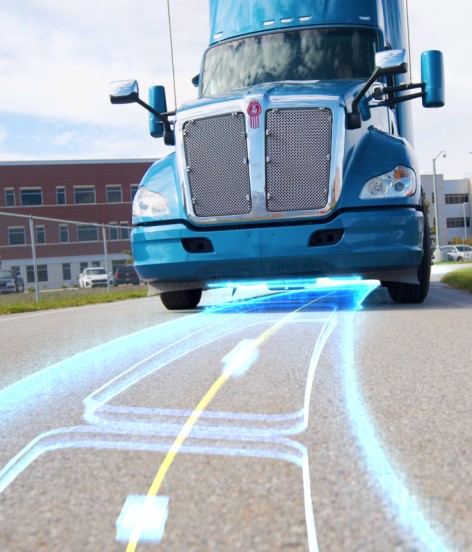
As EVs become more common (annual EV sales are estimated to reach 7.2 million by 2030) innovative new methods are being developed to more easily charge them.
One that could charge EVs while they are in motion is the focus of a new University of Texas at El Paso-led study published in IEEE Access.
The UTEP research group is part of a National Science Foundation and Department of Energy-funded coalition of engineers working on a Dynamic Wireless Power Transfer (DWPT) roadway.
A DWPT roadway would embed transmitter pads within road surfaces, allowing EVs to charge while driving without needing to be hooked up to a power outlet, says the study’s principal investigator and UTEP electrical and computer engineering professor Paras Mandal.
“The field of electrified transportation is evolving, and modelling the load demand on our electrical grid is a very significant part of the work,” he says.
“Our research will allow for a comprehensive understanding of new EV charging methods to ensure sustainable use of our transportation infrastructure coupled with power utilities.”
Most EVs are charged through electrical outlets in households or at public charging stations.
Mandal says residential charging technology is often slow and drains electricity, while public charging stations are currently not widely available in the US.
These limitations may lead to “range anxiety” and may inhibit the widespread adoption of EVs, he says.
The DWPT technology is still in development, but Mandal says before it can be adopted, engineers, utilities and local governments need to have a thorough understanding of the future load demand on the electrical grid.
Modelling “load demand” is challenging because engineers need to account for vehicles of varying sizes, different lengths of roadways, and varying degrees of traffic, he says.
Mandal’s team has developed a novel method of measuring load demand called modified Toeplitz convolution or mCONV. The model is essentially the mathematical formulation of DWPT that allows the engineers to understand dynamic electric load demand while considering different distances, traffic flow and vehicle types.
“The next steps in this research will be to understand how DWPT will affect power system stability and reliability,” Mandal says.
College of Engineering dean Kenith Meissner says: “Dr Mandal’s team is doing innovative work at the frontier of our transportation system,”
“This new model will help local and state authorities as well as utilities understand what’s involved in implementing DWPT roadways and literally paving the way for more widespread adoption of electric vehicles.”
UTEP’s research is part of the ASPIRE group, an NSF Engineering Research Centre that stands for Advancing Sustainability through Powered Infrastructure for Roadway Electrification.
The group comprises several universities, including Utah State University, Purdue University, The University of Colorado Boulder and The University of Auckland New Zealand.



Join the conversation