
Porsche cuts Cayenne Electric development time by 20 percent
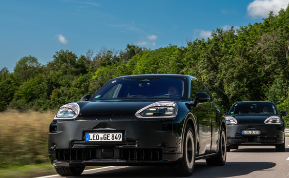
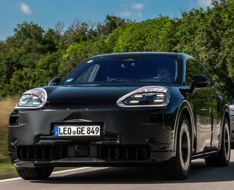
Porsche has reduced development time for its upcoming Cayenne Electric by 20 percent through a digital-first approach that replaces physical prototypes with virtual testing.
The German manufacturer says the new all-electric SUV represents the first project where engineers moved directly from digital whole-vehicle testing to pre-series production, eliminating the traditional construction stage that uses individually built prototypes.
“This project was the first in which we moved directly from digital whole-vehicle testing to pre-series production,” says Michael Steiner, Deputy Chairman and Member of the Executive Board Research and Development.
About 120 test vehicles were largely replaced by digital equivalents, with engineers sending virtual prototypes on digital test drives during the design phase. The Cayenne Electric is set to be unveiled towards the end of the year and will be offered alongside current combustion-engined and hybrid models in New Zealand.
Virtual reality transforms early testing
Porsche’s approach relies on three key elements: precisely digitised routes from the Nürburgring to everyday traffic scenarios, decades of field testing experience from Weissach engineers, and increased computing power for real-time simulations.
Engineers used virtual reality to perform initial tests of the SUV generation while components were available only in digital form. The results were later verified through test bench testing of physical components.
A new composite test bench was developed specifically for the project, allowing drive, battery, energy management and charging systems to be tested together under realistic conditions. Four powerful synchronous motors can simulate different road conditions, acceleration resistance and forces during recuperation and braking.
“The machines are so sophisticated that we can even display different asphalt surfaces or tyre slip,” says engineer Marcus Junige.
Human input remains essential
Despite advances in simulation accuracy, final tuning still requires human expertise. Test drivers perform finishing touches that digital systems cannot replicate, particularly for balancing driving dynamics and control strategies on racetracks.
“In reality, only humans can perform the finishing touches,” says Sascha Niesen, Team Leader Overall Vehicle Testing at the Porsche Development Centre in Weissach.
The Cayenne Electric undergoes testing across all realistic usage scenarios including city driving, highway use and off-road conditions. Particular focus is placed on charging management, ensuring the vehicle remains conditioned for fast charging regardless of driving conditions.
Extreme climate validation
Testing under extreme climatic conditions presents particular challenges for the development team. In hot regions including the Gulf States and Death Valley, climate control and thermal management systems undergo functional tests at temperatures up to 50 degrees Celsius.
Scandinavian testing at temperatures reaching minus 35 degrees Celsius focuses on cold starts, climate control, traction, handling, braking behaviour and driving dynamics control systems. The vehicle must maintain fast charging capability in both climatic extremes.
Endurance testing simulates harsh conditions that customers would only experience in extreme situations. Under everyday conditions, vehicles cover more more than 150,000 kilometres within a few months across city traffic, country roads and highways.
The combination of digital preparation and real-world testing has proven effective across all development areas, making the process more precise and efficient while reducing material consumption through state-of-the-art virtual testing methods.


Join the conversation