
Renault debuts R17 EV Restomod in Paris

On September 4, Renault unveiled its latest collaboration, the R17 electric restomod by Ora Ïto, at Maison5 in Paris.
Ïto is a renowned French designer, and he was inspired by the 1971 Renault 17 sports coupe when he created the new electric concept car for the manufacturer.
However, according to Renault, the striking electric concept car is not a forerunner for a future production vehicle.
The R17 electric restomod by Ora Ïto is on show at Maison5 until September 11.
It will then be presented at the Chantilly Arts & Elegant Richard Mille competition from September 12 to 15 before being exhibited on the Renault stand at the Paris Motor Show from October 14 to 20.
“Revisiting the iconic Renault 17 was a particularly exciting challenge. Working alongside Renault, I could articulate my artistic vision to create a sculpture in my image,” Ïto says
“The R17 restomod aligns perfectly with our approach to uniting heritage and innovation. The R17 was part of pop culture, an icon of the 1970s with its avant-garde design and bold personality. This project celebrates Renault’s original iconic design while giving it a contemporary twist with new features,” Renault Vice President and Chief Branding Officer Arnaud Belloni says.
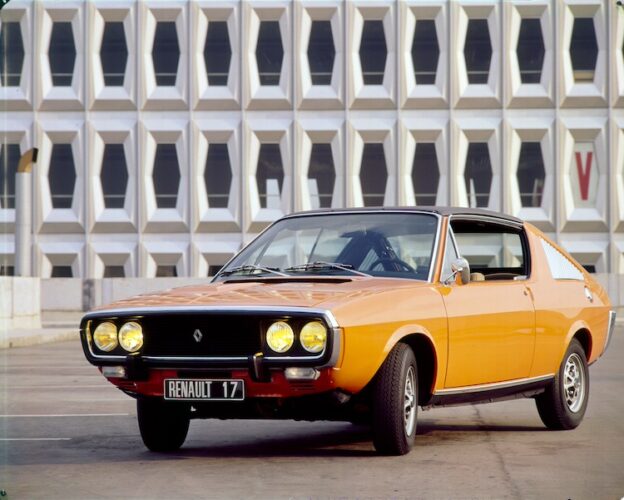
Launched in 1971, the Renault 17 was available as a 4-seater coupé or a convertible. A front-wheel drive with a longitudinal engine, subsequently available with fuel injection, the Renault 17 was both high-tech and elegant. Some 92,000 units were built from 1971 to 1979.
The R17 electric restomod by Ora Ïto is unique, and it was developed in collaboration with Renault’s Design team.
“With Sandeep Bhambra and Gilles Vidal, we worked on a retro theme-futuristic, almost cinematic. I wanted to drape Renault 17 in a second skin, showcasing the design while giving it a more contemporary look regarding flow, dynamics and rationality through my design approach and signature: simplexity. I wanted to simplify the more complex aspects,” Ïto says.
A two-door coupé with a tailgate, the 1971 Renault 17 featured a sporty design accentuated by four round headlamps, frameless doors, a body with no central pillar, fully opening rear side windows and second-quarter windows with louvres.
Based on the monocoque structure of the original, the R17 electric restomod has the same cabin, doors, windows, glazing, seals and underbody.
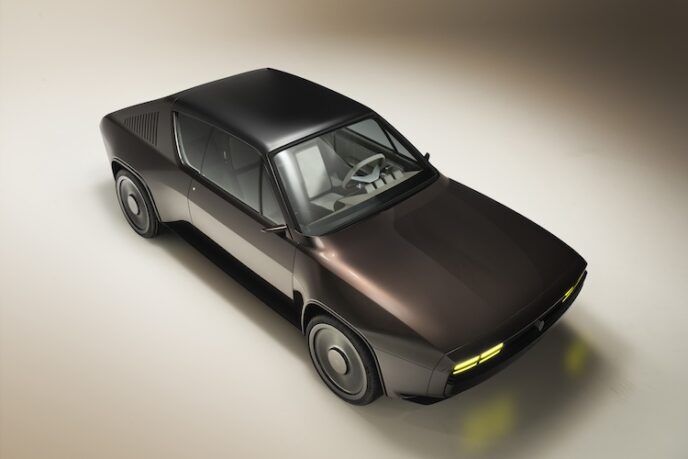
The body is 17 cm wider for better road holding. The design of the wings and wheels gives it a look that is both spectacular and elegant. The headlamps form four rectangular modules with rounded corners, while the rear lights form a single strip. It also features an all-electric 270-hp powertrain at the rear.
The carbon fibre chassis with its flush lines keeps the weight to 1.4 tonnes. The Galactic Brown body colour is an original shade developed especially for the show car.
The R17 boasted all the interior features of an authentic tourer, with its specific driving position, comfortable seats, full range of equipment and meticulous finish.
The restomod version maintains the original standards of comfort while making several changes to the dashboard and centre console.
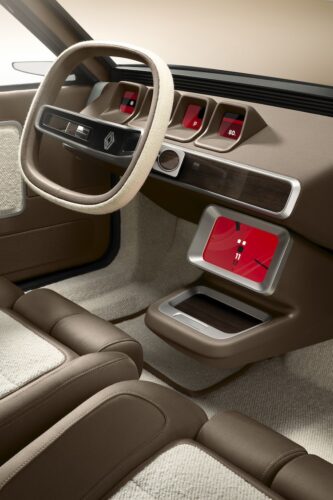
The seats have been redesigned around the original petal structure, with new upholstery, a heathered satin in fine Merino wool for the brown fabric and a delicate lightweight wool bouclé that is both long and thick for the beige fabric.
The R17 electric restomod features a central screen with the current Renault graphic environment and four small geometric screens behind the steering wheel, inspired by the dials of the original model.
“Creating a new artistic take on R17 threw open a vast field of exploration, allowing us to come up with something unexpected and memorable. The creative dialogue between Ora Ïto and our Design team maintains the body lines and spirit of the original R17 while giving it a minimalist, ultra-contemporary look,” Renault concept cars chief designer Sandeep Bhambra says.
“Inside the car, the main features of R17 are given a new twist through the creative vision of Ora Ïto. The style of the geometric lines and shapes takes passengers into the comfortable world of interior design and furnishings.”

Join the conversation