
Renewables underpin Mercury’s growth
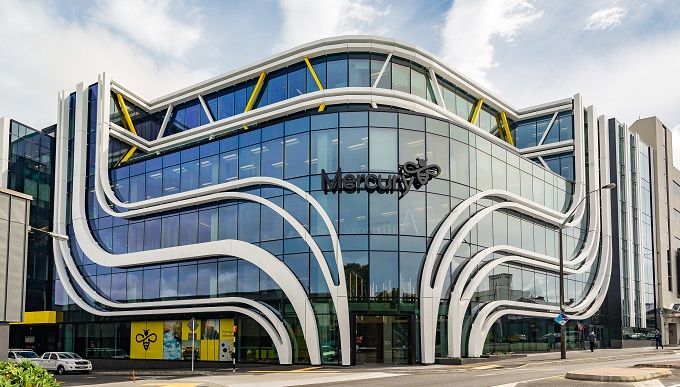
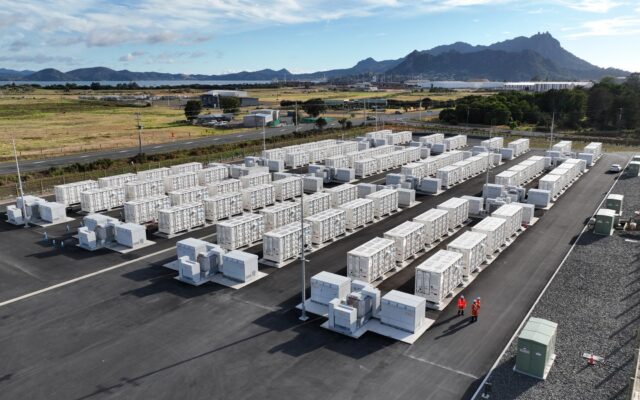
Mercury has delivered more renewable generation in the first half of 2024.
“The renewable energy sector is undergoing transformational growth, and we are part of that change,” says Mercury chief executive Vince Hawksworth.
“The opportunity ahead of us is material – Aotearoa New Zealand’s total energy consumption is expected to reach nearly 60% renewable by 2050, well up from the 20% we’re currently at.”
Mercury recorded $174 million net profit after tax for the half year, down $65 million on the prior comparable period due to higher depreciation, interest charges and net changes in fair value.
It also reported EBITDAF of $434 million, $17 million down on the prior comparable period, a strong performance given the much higher hydro generation during HY23.
Earnings for the period were positively influenced by ongoing investment in renewable generation together with higher prices.
Wind generation increased by more than 40% to 1109GWh, with the full contribution of generation from Turitea South and commissioning of Kaiwera Downs 1 wind farms.
Operational expenditure of $191 million was up $31 million, reflecting increases in employee-related expenses and maintenance expenses mostly from wind contracts, says Mercury.
Stay-in-business capital expenditure for the period was $60 million (up $29 million).
Growth capital expenditure was $70 million (up $26 million) and largely related to construction costs incurred for the addition of a fifth unit at Mercury’s Ngā Tamariki geothermal station and completion of the Kaiwera Downs 1 wind farm near Gore.
Net debt was $1983 million, up $76 million primarily due to higher interest and tax paid combined with a lift in capital expenditure on new generation projects and geothermal drilling.
Hawksworth says business activity during HY2024 was focused on executing against Mercury’s commitment of up to $1 billion investment over the financial year to generation development during the next three years.
Two of the three major projects previously signalled are expected to meet this timeframe.
“Overall, we’re pleased with progress to date,” says Hawksworth.
“We committed $220 million in September to build a fifth generating unit at our Ngā Tamariki geothermal station, which will add another net 46MW.
“We’re also at the advanced stages of approving the development of the 155MW Kaiwera Downs 2 wind farm.”
The third signalled project, Kaiwaikawe wind farm, is experiencing delays related to procurement and construction logistics which will likely delay construction start into FY25.
“In addition, we celebrated the opening of our 43MW Kaiwera Downs 1 wind farm in November, completed under budget and on schedule,” says Hawksworth.
Mercury has also issued a request for expressions of interest for an offtake agreement for 100MW of solar energy, starting 2026.
“We see this as an important step towards further diversification of our renewable energy portfolio, and a meaningful way to support the role independent generators play in New Zealand’s energy market,” says Hawksworth.
Mercury will lift electricity prices for most customers from April 1, 2024, as it says costs to the retail business have increased and it will continue to offer targeted measures to support customers most in need.
“Collective action and whole-of-system thinking will be critical to unlocking prosperity through the energy transition for every individual,” says incoming Mercury chair Scott St John.
“Managing affordability will be a key challenge as the transition progresses, and Mercury will continue to work with the sector, community, Government and others on this,” he says.
“We continue to have an open conversation about the impact of cumulative changes on affordability, including distribution and transmission investment, growth in intermittent renewables, New Zealand’s Emissions Trading Scheme and near-term inflation, skilled worker shortages and supply chain issues.”
An interim dividend is proposed of 9.3 cents per share, up almost 7% on the HY23 dividend.
Full year dividend guidance is unchanged at 23.3 cents per share.
FY24 EBITDAF guidance has increased to $880 million from $835m, mostly due to better pricing outcomes in generation and wholesale segment.
Mercury says this assumes mean hydro generation (4067GWh) and is subject to any unforeseeable circumstances.

Join the conversation