
Report calls for urgency on EV bus fleet in Australia-NZ
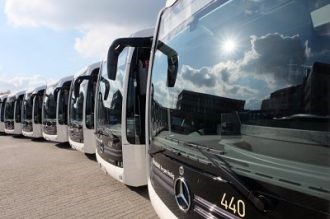
A new report is calling for a rapid transition of Australia and New Zealand’s bus fleets from diesel to zero emissions technology in order to achieve emission reduction targets.
Commissioned by the International Association of Public Transport in Australia and New Zealand (UITPANZ), and written by L.E.K. Consulting and Arup, the report draws on discussions and sentiments expressed during the Zero Emissions Bus Forum, including the opportunity for Australia to harness its natural resources to emerge as a lead exporter of zero emissions buses.
UITPANZ hosted the online forum in late 2020, where key public transport industry stakeholders came together to explore the challenges and opportunities of decarbonising bus fleets.
UITPANZ executive director Michelle Batsas says clean public transport is what people want.
“Our members, including government authorities and public transport operators, are committed to doing their part to ensure good air quality for the future.
“The NSW Government is working to electrify the state’s 8000 buses by 2030, and the recently re-elected Queensland, ACT and New Zealand Governments, as well as the Victorian Government, have announced their intentions to switch from diesel to zero emissions buses,” she says.
“They’ve got the social licence to make significant changes to reduce carbon emissions, and zero emissions buses are an important part of achieving that.”
Minister for transport and roads Andrew Constance says the NSW Government was looking forward to delivering a greener future for the people of NSW.

“We’ve had some wonderful feedback from drivers and customers in the inner west where we’ve been trialling five electric buses and we are thrilled to be rolling out at least another 50 zero emissions buses across greater Sydney in the next 12 months,” he says.
“In addition to working closely with operators across the state, over the course of this year we’ll be partnering with the industry to deliver a series of trials to better understand the latest zero emission technology, the infrastructure and the changes needed to make this large scale transition a reality.”
Natasha Santha, partner at L.E.K. Consulting Australia, says the report highlights the market advantages the region could capitalise on.
“The report explains why Australia and New Zealand have a unique opportunity and how we can learn from international successes and challenges to transition to zero emissions buses faster than anywhere else in the world.
“It is commercially attractive to begin the zero emissions bus transition now. With technology improvements and significant environmental benefits, the business case for transition will only get stronger.
“To maximise the economic development benefit, it is important for jurisdictions to work together, creating scale economies and greater certainty for industry.”
Mark Rowland, transport and highways advisory leader (Australia) at Arup, says transitioning to zero emissions buses presents a once in a generation opportunity to realise the environmental, social and economic benefits from designing, manufacturing and employing these vehicles in our region.
“Government involvement is key to creating momentum in Australia and
New Zealand, with manufacturers keen to transition to high-tech zero emissions vehicles for the local markets,” Rowland says.
“The average bus burns around 7000 litres of diesel a year which equates to 18 tonnes of CO2 – imagine the difference that would make at a city scale.”
Batsas also highlights how decarbonisation will help the public transport sector recover from the COVID-19 pandemic.
“We can win back passengers by ensuring public transport is the most sustainable way to get around our cities and towns.
“If we want a future of clean air and decongested roads, public transport must be the backbone of how people travel.”



Join the conversation