
Report suggests increasing EV smart charger uptake

EV smart charging technology has benefits for owners and will reduce the future load on New Zealand’s energy system if advantage is taken of it now.
So says the Energy Efficiency and Conservation Authority (EECA) which commissioned KPMG to undertake research on EV smart charging technology for use in homes, the report released on October 15.
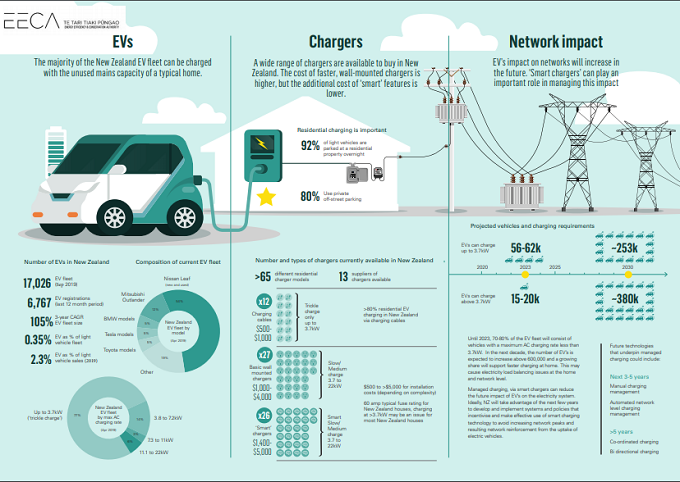
The report Electric Vehicle Charging Technology – a New Zealand Residential Perspective found a wide range of chargers available with various smart charging functions, ranging from basic timers to advanced wifi or cellular connectivity enabled systems that can monitor information and respond to signals to vary charging levels.
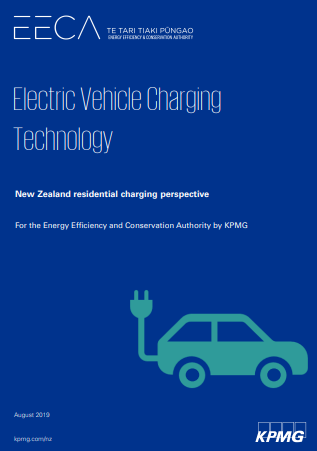 It says Kiwi EV owners can choose from more than 65 charger models with fully installed chargers costing anywhere from about $1000 to more than $10,000.
The research will inform the conversation about the role of EV charging in the electricity system and the transition to a low emissions economy, EECA says.
While the New Zealand EV fleet is still relatively small, the majority of the fleet can be charged within the mains capacity of a typical home, and most EV owners use the basic cable supplied with their vehicle, EECA chief executive Andrew Caseley says.
“We have a golden opportunity now to encourage uptake of smart charging technology. As the EV fleet grows, charging will increase power demand and have an impact on the electricity system,” he says.
“If people plug their cars in when they get home from work, they’re adding to peak electricity demand. The use of smart chargers to charge EVs during off peak periods will reduce power costs for consumers and increase the use of clean, renewable electricity.”
EECA will be undertaking further investigations later this year to determine how EV charging technology can be integrated into our energy system.
This will include modelling for the value case for ‘smart charging’ and understanding perspectives of households and consumers.
Caseley says that while addressing peak demand is vital, one of the main barriers to adoption of smart charging technology is the up-front cost and lack of incentives.
“There is no doubt that wide uptake of EVs is a critical part of decarbonising the transport sector,” he says.
“Ideally, the next few years will see systems and policies introduced to ensure clean and clever EV charging is integrated efficiently into our energy system.”

Join the conversation