
SEA Electric’s Melbourne factory now solar powered
Australian zero-emissions truck manufacturer SEA Electric has put a 100kW rooftop solar power system on its Melbourne assembly facility, providing sufficient electricity for the whole plant.
Featuring an array of 250 by 400W solar panels, the system is tracking at 90% carbon positive, producing 24MWH of energy to date.
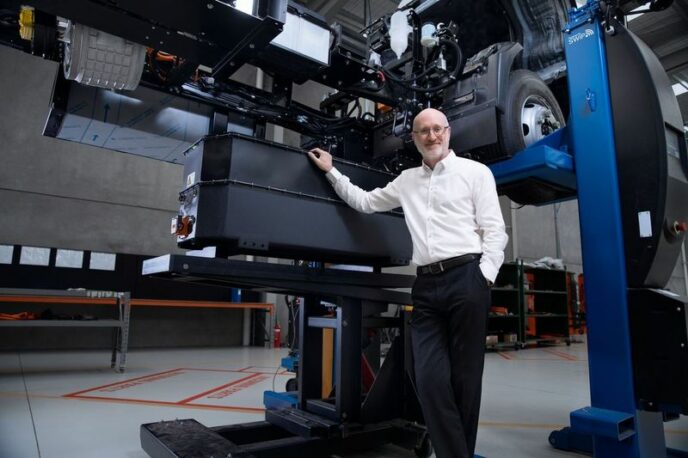
“Here at SEA Electric, we are proud to be leading the charge to eliminate CO2 emissions through our range of all-electric trucks; the next logical step has been to run our manufacturing facility purely on solar power,” SEA Electric Asia Pacific vice president Glen Walker says.
“Electricity generation and transport are the two biggest producers of carbon dioxide in Australia, so all-electric transport powered by renewable energy makes a lot of sense moving forward.
“For new SEA Electric owners, making the switch to zero-emissions logistics eliminates diesel consumption and lowers maintenance costs, with fewer moving parts requiring less ongoing servicing.”
Electric vehicles are only one aspect of the new energy ecosystem, with the EVs having the ability to provide energy storage opportunities, which in the future will pave the way to further power grid stability and flexibility.
SEA Electric founder and chief executive Tony Fairweather has first-hand insight regarding the deployment of large-scale electric-powered fleets in the USA.
“Many of these large fleets utilise their vehicles for less than half of a 24-hour day; the balance is spent in depot yards, where rooftop solar panels can generate ample power supply to fully charge their batteries,” he says.
“Consider a future transport depot to be a nationally networked, renewable power plant, not only charging fleets but also offering excess stored energy back into the power grid, possibly supported by additional on-site battery storage.
“While Moss Landing in California houses the world’s largest and most expensive battery storage facility, SEA Electric plans to deploy more battery capacity in 2024 than that entire facility.”
Fairweather says “essentially it is mobile and readily available storage on wheels”.
“With Australia now agreeing to achieve net-zero emissions by 2050 at the recent UN Climate Change Conference (COP26), look no further than networked depot power plants to contribute substantially to achieving this critical milestone.”
Click here for more information.


Join the conversation