
Shipping bodies urge world leaders to speed up decarbonisation incentives
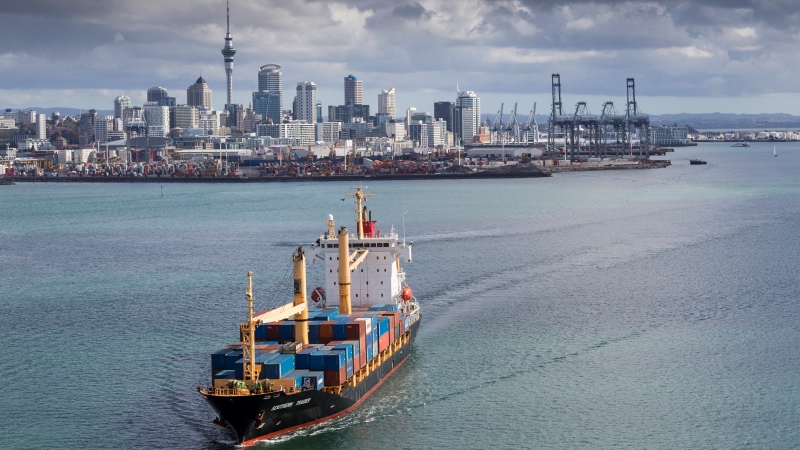

The world’s major shipping organisations are calling on world leaders to do more to accelerate decarbonisation targets across the entire global shipping industry through the adoption of market-based measures (MBMs).
The call comes ahead of US president Joe Biden’s Leaders Summit on Climate which is seen as a precursor to the United Nations Climate Change Conference and the International Marine Organisation’s Marine Environment Protection Committee.
The shipping bodies want leaders to put their political weight behind the industry’s desire to eliminate the 2% of all global CO2 from the the sector.
The main associations making the proposal and collectively representing more than 90% of the world merchant fleet include BIMCO, Cruise Lines International Association, International Chamber of Shipping and the World Shipping Council.
The groups have submitted a proposal to the International Maritime Organization (IMO) calling for the UN’s regulatory body to bring forward discussions around market-based measures (MBMs) by several years.
It says these measures will be critical to incentivise the transition of the global fleet to new fuels and technologies, which will be more expensive than those in use today.
MBMs put a price on CO2 emissions to provide an economic incentive for a sector to reduce its emissions by narrowing the price gap between fossil fuels and zero-carbon fuels.
Shipping leaders believe now is the time for the IMO member states to consider the role of MBMs so that measures can be developed and implemented to facilitate the adoption of zero-carbon technologies and commercially viable zero-carbon ships.
For a pricing signal to work, there must be viable alternatives to fossil fuels. These alternatives do not yet exist for large trans-oceanic ships. Alternative technologies would be enabled by a massive acceleration of IMO co-ordinated research and development, financed by the industry, so that ocean-going ships will be able to switch to new fuels, they say.
Member states and industry have already put forward a proposal to create a US$5 billion fund to provide the research and development needed to create the technologies to decarbonise the sector. Industry leaders have also reiterated their call for nations to support the research and development proposal at the IMO.
The growing need for the consideration of MBMs at the global level, along with accelerated research and development, “is too urgent to ignore”, shipping leaders say.
The industry bodies’ submission to the UN states: “The ability to consider different candidate measures in parallel will be critical if to move forward with the urgency that the challenge of decarbonising shipping requires, given the urgent need to make progress on delivering [our] levels of ambition.”
In alignment with shipping’s strategy to reach decarbonisation targets already set by governments, the industry is encouraging the world’s largest economies to expand and accelerate applied research and development efforts.
As MBMs can take several years to develop and enter into force, their implementation and incentivising impacts will only be able to coincide with the wider introduction of zero-carbon technologies if measures such as the industry-financed R&D fund proposal are approved, industry leaders say.
The shipping groups are calling for any MBM to be applied in a “fair and equitable way”.
They echo concerns that have been raised over unilateral carbon pricing schemes, such as the EU’s proposed expansion of its Emissions Trading Scheme which is seen by some observers as a “market distorting solution to a global problem”, they say.
“Fair and equitable MBMs are a viable policy option to transition to the new fuels and technologies that will be necessary to phase-out GHG emissions in the sector,” the shipping leaders say.
“We’re joining with industry colleagues to urge the UN and national governments to prioritise discussion on MBMs to make sure that shipping remains on course to meet vital decarbonisation goals.
“The decarbonisation of international shipping will depend on out-of-sector stakeholders developing market-available zero-carbon technologies and fuels and the maritime sector will need the technologies to use these. The urgency of the challenge requires leadership and a properly coordinated approach to catalyse and incentivise the transition to zero-emissions sector,” it says.


Join the conversation