
Shotover Jet, water taxis and ferry go electric
 Boats are switching to electric under four low-emission marine transport projects given a total $800,000 from the Energy Efficiency and Conservation Authority (EECA) marine electrification fund.
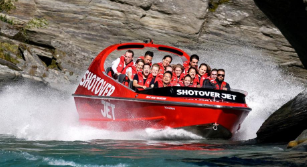
About $200,000 co-funding goes to Ngai Tahu Tourism to convert a V8 petrol-powered jet boat to 100% electric twin motor propulsion for river trials and testing for likely introduction to its Shotover Jet tourism operation.
The funding covers about 36% of the cost and would help make it among the first tourism operators in the world to switch to electric jet boats.
The company plans to eventually convert its fleet of jet boats in Queenstown, Glenorchy, Hollyford Valley and Taupo to electric power to meet its zero-carbon goal by 2040.
Explore Group receives $158,070 co-funding (17% of total project costs) for converting two of its Auckland’s Waitemata Harbour ferries to battery electric for harbour tours and a water taxi service.
These are expected to operate mainly in the Viaduct Harbour area in preparation for the 2021 America’s Cup regatta (March 6-21, 2021).
Black Cat Cruises gets $200,000 co-funding (6% of total project costs) to build a new 70-seat electric ferry for a public passenger ferry service between Lyttelton and Diamond Harbour.
The Diamond Harbour Electric Passenger Ferry will replace a smaller diesel boat, with the company operating more than 8400 return crossings annually.
Petroleum Logistics (GOFuel) receives $76,065 co-funding (40% of total project costs) to retrofit its marina work boat used for towing and a water taxi service with an electric outboard motor and a fast charge capable battery pack. It will also install New Zealand’s first public marine fast charger at Westhaven Marina to provide charging services to future electric boat operators.
Details of a fifth project will be available when an agreement is finalised between EECA and the applicant.
“We have approved funding for projects that will demonstrate the viability of electric marine passenger vessels in New Zealand,” EECA board chair Elena Trout says.
“Finding ways to move away from fossil fuels for transport is essential if New Zealand and the world is to significantly reduce greenhouse gas emissions and combat climate change.”
Trout says the marine electrification funding round was established due to increasing interest in the technology and demand by industry, particularly as the EECA administered low emission vehicles contestable fund is restricted to road transport and associated infrastructure,
“We recognised that there is potential for a number of existing marine passenger vessels and also personal watercraft to convert to electric propulsion,” she says.
Total EECA funding available for each successful project was limited to $200,000, and up to a maximum of 40% of the incremental cost of the marine electrification project.
Check the low emission vehicles contestable fund and EECA’s technology demonstration fund
for more information.

Join the conversation