
Silicon a key for EV batteries
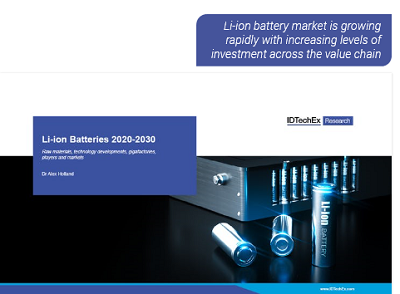 A key to the digital revolution, silicon is beginning to show potential in lithium-ion batteries, a critical technology in solving the longer-term crisis of climate change.
So says IDTechEx in its newly updated report Where Is Li-ion Technology Heading?
It says the li-ion market is growing but outlines which li-ion chemistries and technologies are likely to be used.
Basically, li-ion cells consist of an anode, cathode and electrolyte – the anode and cathode being largely responsible for how a cell performs.
While various cathode materials are used commercially, only graphite is widely used at the anode. However, this may well be set to change, the report notes.
“Silicon has garnered industry-wide attention due its ability to store 10 times the amount of lithium compared to graphite.
“However, the material can expand up to 300% when charging, a major issue as it leads to low cycle life.
“As such, start-ups developing silicon anodes have received hundreds of millions of dollars in funding to find and scale solutions to this problem. And solutions do now exist, providing various opportunities for materials manufacturers,” the report says.
IDTechEx believes silicon dominant anodes will soon be utilised in mass market consumer devices before being rolled-out in the automotive sector later in the decade.
At the cathode, much of the discourse has been around high-nickel layered oxides, such as NMC 811 – needed to reduce cobalt content and increase energy density, the report adds.
“Major players such as LG Chem, CATL, SK innovation and EcoPro all plan to move toward NMC 811. “But similar to silicon, commercialisation has been slow due to issues around poor stability, safety and cycle life.
“Various solutions exist to improve stability and are being developed. Even with these solutions, high-nickel cathodes will not be suitable for every application.”
Li-ion technology is central to both the success of electric vehicles and the increasing penetration of renewable power, the report says.
“While the technology is not perfect, it provides reasonable energy density, power and cycle life at costs as low as $100/kWh and innovations continue to improve the technology.
“All of which means that li-ion will continue to be the dominant battery technology, highlighting the importance of understanding developments in the market and technology.”
Join the conversation