
Sodium-ion batteries on EV horizon
Abundant cheap sodium is being touted as a promising candidate for new battery technology that may eventually power EVs and store solar energy.
Sodium-based batteries are considered more environmentally friendly and less expensive once the technology is established with a research team from the US Department of Energy’s Pacific Northwest National Laboratory developing a sodium-ion battery with greatly extended longevity in laboratory tests.
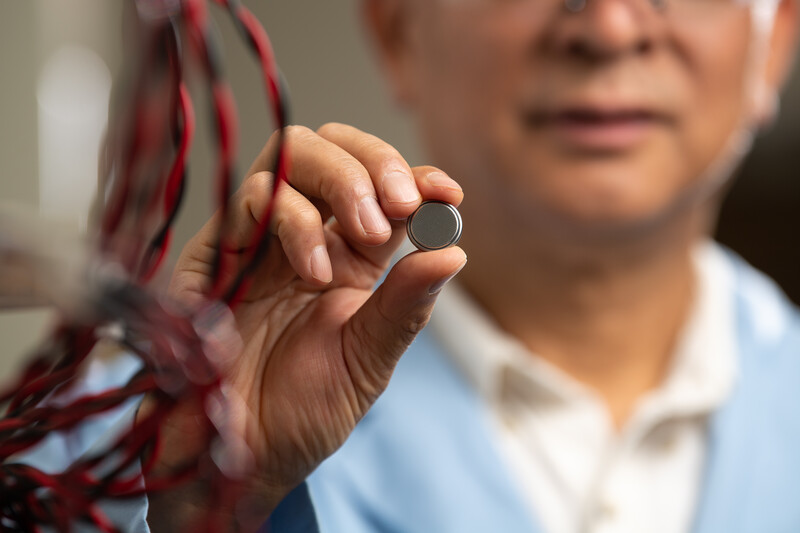
PNNL scientists greatly extended the number of charging cycles to 300 or more with minimal loss of capacity (about 90% retained) in a coin-sized battery.
The key is changing the cathode material and adding a totally different charge carrier (the electrolyte).
An ingenious shift in the ingredients that make up the liquid core of the battery prevents the performance issues that have bedevilled sodium-based batteries.
The findings, described in the journal Nature Energy, provide a promising recipe for the battery.
“Here, we have shown in principle that sodium-ion batteries have the potential to be a long lasting and environmentally friendly battery technology,” says PNNL lead author Jiguang (Jason) Zhang, a pioneer of battery technologies with more than 23 patented inventions in energy storage technology.
In batteries, electrolyte is the circulating “blood” that keeps the energy flowing. It forms by dissolving salts in solvents, resulting in charged ions that flow between the positive and negative electrodes.
Over time, the electrochemical reactions that keep the energy flowing tend to get sluggish, and the battery can no longer recharge. In current sodium-ion battery technologies, this process happens much faster than in similar lithium-ion batteries.
The PNNL team, led by scientists Yan Jin and Phung Le, attacked that problem by switching out the liquid solution and the type of salt flowing through it to create a wholly new electrolyte recipe.
The current electrolyte recipe for sodium-ion batteries results in the protective film on the negative end (the anode) dissolving over time. This film is critical because it allows sodium ions to pass through while preserving battery life.
The PNNL-designed technology works by stabilising this protective film. The new electrolyte also generates an ultra-thin protective layer on the positive pole (the cathode) that contributes to additional stability of the entire unit.
The new PNNL-developed sodium-ion technology uses a naturally fire-extinguishing solution that is also impervious to temperature changes and can operate at high voltages. One key to this feature is the ultra-thin protective layer that forms on the anode. This ultra-thin layer remains stable once formed, providing the long cycle life reported in the research article.
“We also measured the production of gas vapor at the cathode,” says Phung Le, a PNNL battery chemist and one of the study’s lead authors.
“We found very minimal gas production. This provides new insights to develop stable electrolytes for sodium-ion batteries that may operate at elevated temperatures.”
The research team continues to refine the design and is experimenting with other designs to reduce and eventually eliminate the need to include cobalt.


Join the conversation