
Standards proposed for US national EV charging network
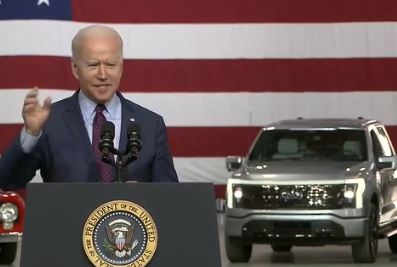
New standards are proposed via the White House to make EV charging convenient, reliable, and affordable for all Americans, including when driving long distances with a national network of about 500,000 EV chargers expected by 2030.
Without strong standards, chargers would be less reliable, may not work for all cars, or lack common payment methods, says the White House. “The new standards will ensure everyone can use the network – no matter what car you drive or which state you charge in.”
The proposed standards, along with new coordinated federal actions on EVs, support President Joe Biden’s priorities to lower costs for families, create good-paying jobs, and combat climate change. “He is pressing Congress on his plan to provide tax credits that make EVs more affordable, so families’ budgets aren’t hurt by volatile gas prices,” the White House explains.
The new standards are proposed by the US Department of Transportation, in partnership with the Department of Energy.
It’s a key part of the “Bipartisan Infrastructure Law” investments to enable US families to plug-in, charge up, and drive across America.
EV sales have doubled since Biden took office, reported to be now more than two million EVs on the road and 100,000 chargers, the White House says.
Investments include US$7.5 billion for EV charging infrastructure and more than US$7 billion for the critical minerals supply chains necessary for batteries, components, materials, and recycling.
The US aims for 50% of new vehicles sold in 2030 to be electric.
Its EV charging network is provided through two programs. The National Electric Vehicle Infrastructure (NEVI) program will provide US$5 billion in formula funding to states to build out charging infrastructure along highway corridors – filling gaps in rural, disadvantaged, and hard-to-reach locations.
The recently announced minimum standards and requirements will guide states on how to spend federal funds in a way that makes chargers function the same from state-to-state, easy to find, use, and pay for, no matter who operates chargers.
The Bipartisan Infrastructure Law also provides $2.5 billion in competitive grants to support community and corridor charging, improve local air quality, and increase EV charging access in underserved and overburdened communities. Applications for this program open later this year.
A Joint Office of Energy and Transportation will work with states, industry leaders, manufacturers, and other stakeholders to meet the president’s goals.
US vice president Kamala Harris launched an EV Charging Action Plan that fast tracks federal investments and targets equity benefits for disadvantaged communities – and the Department of Transportation released a Rural EV toolkit to help ensure all Americans have the opportunity to benefit from the lower operating costs, reduced maintenance needs, and improved performance that EVs provide.
These investments, steered by the proposed standards, will create a public charging system that meets the goals of being reliable, affordable, equitable and seamless between states and networks. They will also use workforce standards such as the Electric Vehicle Infrastructure Training Program (EVITP) to increase the safety and reliability of charging station’s functionality and usability.
A new Federal Advisory Committee called the EV Working Group will be established to “make recommendations regarding the development, adoption, and integration of light-, medium-, and heavy-duty electric vehicles into the transportation and energy systems of the United States”.
Its 25 members will be selected in coming months. The joint office also announced a partnership to support EV charging with the American Public Power Association, Edison Electric Institute, and National Rural Electric Cooperative Association to inform electric system investments and support state planning.
At the end of June, the Department of Commerce will host the 2022 SelectUSA Investment Summit promoting foreign direct investment in the US, where investment opportunities in EV charging catalysed by the Bipartisan Infrastructure Law will be highlighted.

Join the conversation