
Study finds EV trucks save 50% more CO2 than EV cars
The electric pick-up market continues to be the talk of the town, with Elon Musk recently confirming that Tesla Cybertruck production will commence in 2023.
A new study by the University of Michigan Center for Sustainable Systems has detailed just how integral electric pick-ups are going to be in the race to reduce tailpipe emissions.
The US-based study calculated the average lifetime CO2 emissions of an internal combustion pick-up, SUV, and sedan, before comparing these numbers to the lifetime emissions of equivalent body-style electric vehicles.
Specifically, the study’s figures were based on ‘cradle-to-grave’ numbers. This means they factor in the often touted higher emissions costs during the production phase of electric vehicles.
It found that over the vehicle’s lifetime, an electric sedan would cut emissions 45 metric tons, an electric SUV 56 metric tons, and a pick-up 74 metric tons. This means that over a lifetime of use, an electric pick-up saves 50% more CO2 emissions than an equivalent car.
“Sedans, SUVs and pickup trucks, battery-electric vehicles have approximately 64% lower cradle-to-grave life cycle greenhouse gas emissions than internal-combustion-engine vehicles on average across the United States,” says the study.
“Replacing an internal-combustion-engine sedan with a battery-electric sedan saves 45 metric tons of carbon dioxide equivalent; replacing an internal-combustion-engine SUV with a battery-electric SUV saves 56 metric tons of carbon dioxide equivalent, and replacing an internal-combustion-engine pickup with a battery-electric pickup saves 74 metric tons carbon dioxide equivalent over the lifetime of the vehicles,” adds study first author Max Woody.
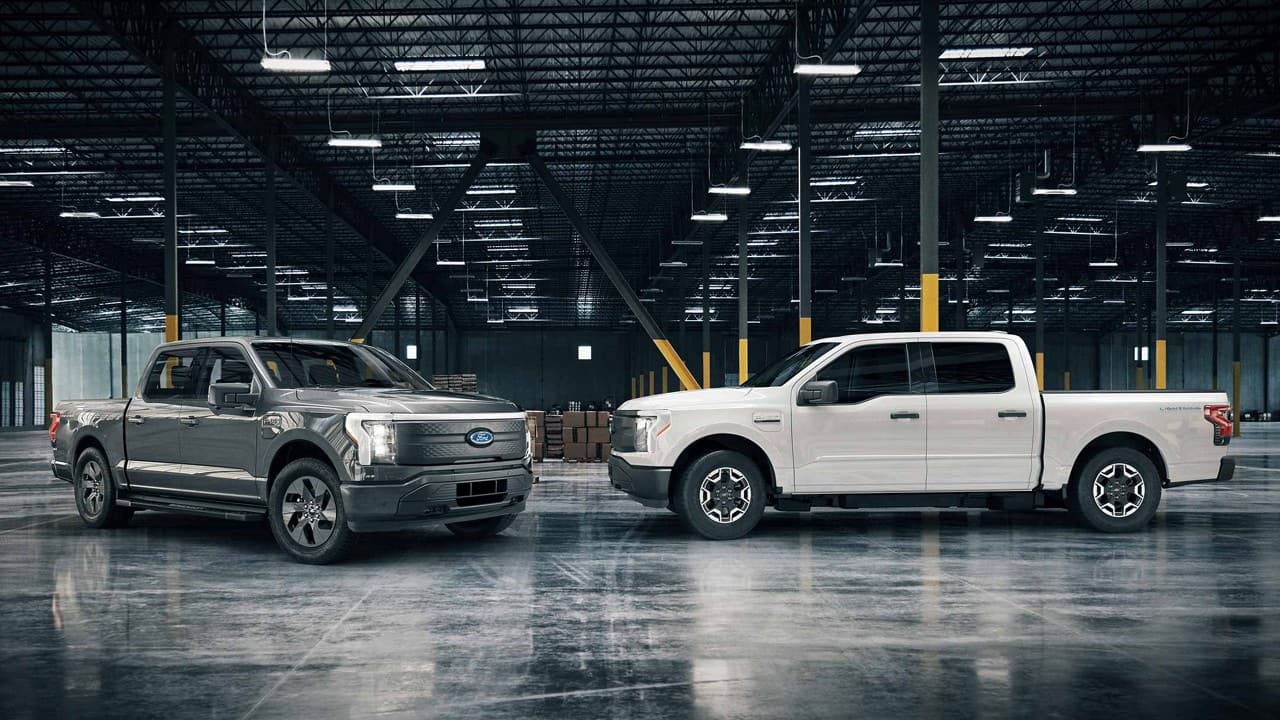
It’s important to note that the study was commissioned by Ford. The blue oval has a significant dog in the fight, having debuted its upcoming F-150 Lightning electric pick-up last year.
The Lightning aims to be the market leader in the plug-in pick-up space in the US, where it will eventually battle the Cybertruck, Rivian R1T, and Hummer once launched. Ford has already boasted impressive pre-order numbers, with over 200,000 orders claimed so far.
Although the study’s figures underline that opting for a plug-in pick-up has environmental benefits, it’s worth remembering that those motivated primarily by emissions reduction would shrink their CO2 footprint even further by opting for a smaller electric vehicle.
The Ford F-150 Lightning’s chances of a New Zealand berth took a slight hit last month. Ford Australia announced that it would be offering internal combustion F-150s for sale in right-hand drive for the first time in several decades, with Ford New Zealand missing out for the time being.
The Lightning was not confirmed for Australia during the announcement, although Andrew Birkic, President and CEO of Ford Australia and New Zealand, said the brand has an “open mind” about adding further models to the range.
“I absolutely love the Lightning,” he added. “It’s incredible. Absolutely, I’m sure we could sell that product.”
Join the conversation