
Tesla’s Cybercab enters service in Austin, months after it was spotted testing in NZ
Tesla has added the steering-wheel-free Cybercab to its Robotaxi service in Austin, with 45 registered in Texas so far, months after the cars were spotted testing in New Zealand.
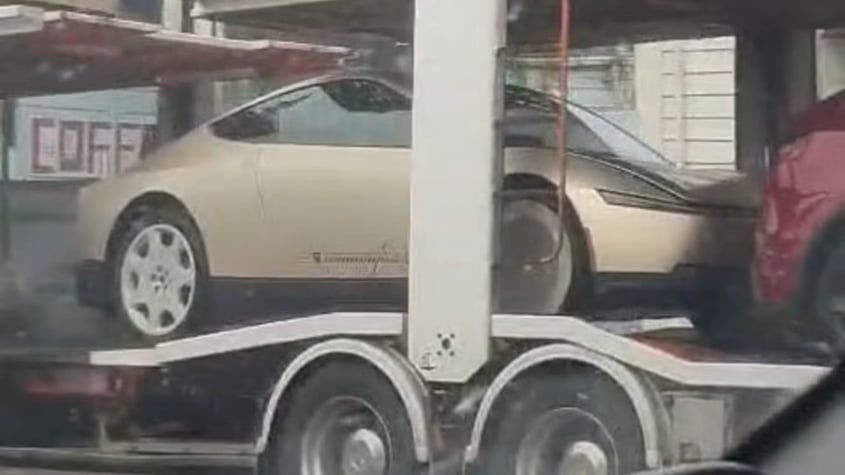
Tesla has put its Cybercab into passenger service, adding the two-seat vehicle with no steering wheel or pedals to its Robotaxi app in Austin, Texas, at an invitation-only launch event on Thursday evening US time.
Riders in the city can now choose between a Cybercab and one of the modified Model Ys that have carried the service since it opened in June 2025. The app describes the Cybercab as Tesla’s first purpose-built autonomous vehicle, and the company has published Cybercab-specific terms, including a minimum passenger age of 13, against eight for the Model Y.
The car was unveiled as a concept in October 2024 on a Hollywood studio lot. The first production unit left the Giga Texas line on 17 February, volume production followed in April, public-road engineering tests began on 30 June and employees took rides from July. Bloomberg reported that Tesla had registered 45 Cybercabs with Texas authorities by Wednesday, within a Texas robotaxi fleet of about 420 vehicles, most of them Model Ys. Waymo, the market leader, has close to 1,000 registered in the state and completes more than 500,000 paid rides a week across 14 US metropolitan areas.
The Cybercab has butterfly doors, a low seat height designed for wheelchair users, extra luggage space for assistive devices and braille on its handles. It is front-wheel drive with a battery under 50kWh, runs on Tesla’s camera-only Full Self-Driving system and the company’s AI4 computer, and Tesla has said it will not fall under the US regulator’s 2,500-vehicle annual cap for cars without conventional controls. Chief executive Elon Musk has repeatedly said it will become Tesla’s highest-volume vehicle, with an operating cost target of US$0.20 a mile at scale and eventual private sales at under US$30,000 from 2027.
The Robotaxi service now operates in seven US markets: Austin, Dallas, Houston, Miami, Orlando, Tampa and the San Francisco Bay Area. Some rides run without a human safety monitor aboard. Austin fares stand at US$3 plus US$1.40 a mile. Nevada approved Tesla to operate in Clark County, including Las Vegas, last month, with an allocation of up to 5,000 vehicles that the company’s Cybercab chief engineer told regulators would more realistically mean around 2,500 within a year. Federal regulators documented 17 incidents involving Tesla’s Austin fleet between July 2025 and March 2026, none of them major crashes.
Tesla has not said how many Cybercabs are carrying paying passengers, or when the service will expand beyond the invited group. Musk posted “a storm of Cybercabs” in the hours before the event, and the company staged the vehicles in cities across the United States in the days beforehand.
The New Zealand connection
New Zealand has already seen the car. Cybercabs arrived here in June for Southern Hemisphere winter testing, and one was photographed on a public road in July. No autonomous ride service is proposed for this market, where the vehicle would fall outside the current rules for driverless operation, though Tesla’s supervised FSD v14 has been available to New Zealand owners since June.
Join the conversation