
Five cars, no drivers: Europe’s first autonomous race decided by a crash between the leaders
Kinetiz of the UAE won Europe's first five-car autonomous race at Imola after the two leaders collided, in the Abu Dhabi Autonomous Racing League's first event outside Yas Marina.
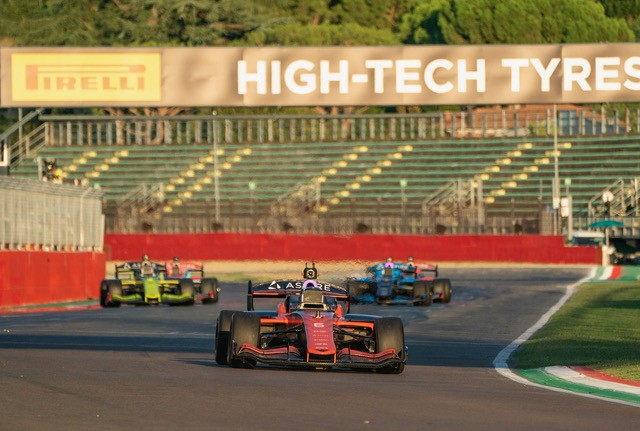
Five race cars with nobody aboard ran 12 laps of Imola on Saturday in Europe’s first multi-car autonomous race, and the winner took the flag because the two cars ahead of it crashed into each other.
The Abu Dhabi Autonomous Racing League’s first event outside Yas Marina was won by Kinetiz of the UAE, ahead of Germany’s Constructor Racing and Italy’s PoliMOVE, with Italian team Unimore fourth and two-time champions TUM of Germany fifth. All five ran identical EAV-25 cars, a Dallara SF23 Super Formula chassis carrying 15 sensors including lidar, cameras, radar and GPS, so the competition sat entirely in each team’s perception, planning and control software.
The race did not go to plan for the fastest cars. TUM’s title defence ended on the formation lap with a technical fault that sent it back to the pits before the rolling start. Pole-sitter Unimore led and set the fastest lap at one minute 40 seconds before its own technical issue brought it to an abrupt halt on the circuit. PoliMOVE, which had run within a second of the leader throughout and recorded the race’s top speed of 252.3km/h, could not avoid the slowing car and hit it from behind, ending both their races and handing Kinetiz a lead it kept to the finish.
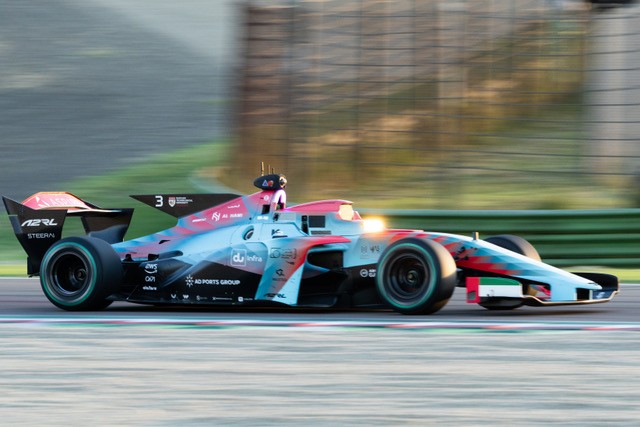
“Imola put that approach to the test, with five autonomous cars navigating the uncertainty and pressure of a live race,” says Faisal al Bannai, secretary general of Abu Dhabi’s Advanced Technology Research Council, which runs the series through its ASPIRE arm. “The wider value lies in what the race revealed about reliability, resilience and real-time decision-making.”
Imola’s elevation changes, narrow lines and limited run-off make it one of the harder circuits for a human, and the organisers chose it to test how the software handles grip, traffic and overtaking decisions under sustained pressure. Teams had nine days of physical testing in conditions that included rain and hail, on top of a simulation programme running digital twins of Yas Marina, Suzuka and Imola that ASPIRE says accumulated more than 5,000 hours in 2025.
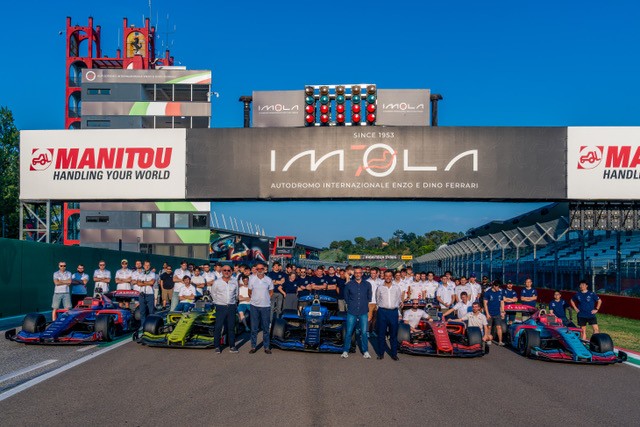
A2RL launched in 2024 and ran a six-car final at Yas Marina last year at speeds over 250km/h. Its human-versus-AI programme has narrowed the gap to a professional driver’s lap to 1.58 seconds. The series returns to Abu Dhabi for its next round, with Imola’s data feeding back into the research programme there.
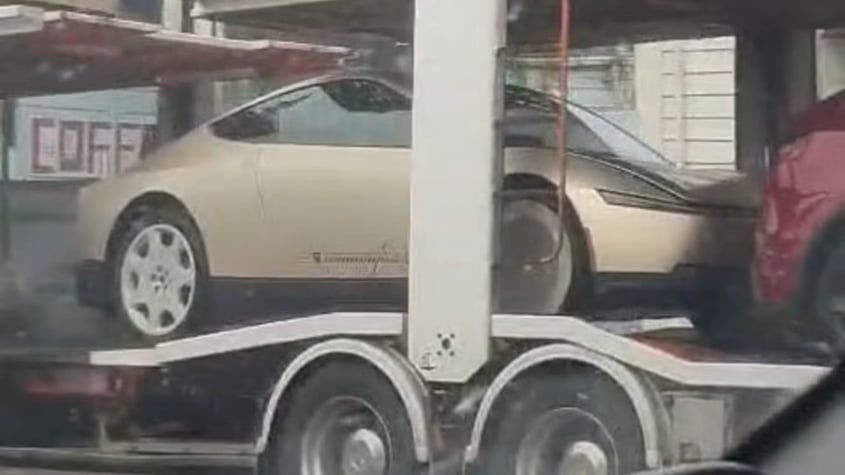
The race is a long way from the road, but it is a public testbed for the same problem the road cars face: what an autonomous system does when the situation in front of it changes faster than its plan. That the two leaders found the limit of the answer at Imola, days after Tesla put its Cybercab into passenger service, is the part worth watching in the replay.
Join the conversation