
Tesla outlines Semi specifications as mass production nears
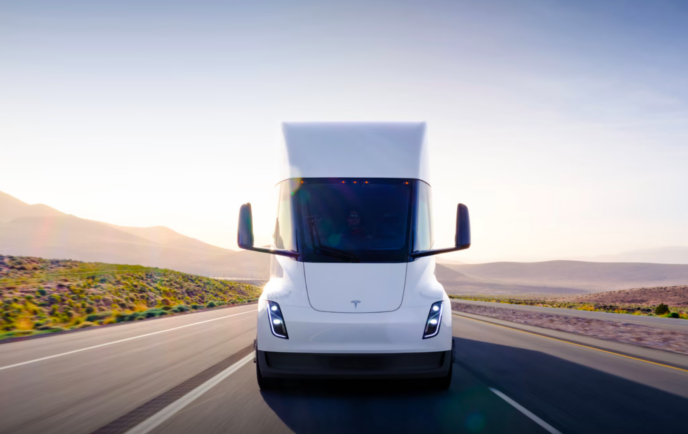
Tesla has revealed specifications for its long-awaited Semi electric truck as the company prepares for high-volume production this year.
As part of the specifications published on Tesla’s website, the Semi will be offered in two main variants.
The standard-range Semi has an estimated range of about 325 miles (around 523km) and a gross combination weight rating of 82,000lb (about 37,200kg). Tesla lists a curb weight of under 20,000lb (less than about 9,070kg).
The long-range Semi extends the estimated range to about 500 miles (around 805km), with the same gross combination weight rating and a listed curb weight of 23,000lb (about 10,430kg).
Tesla is quoting customers US$290,000 for the 500-mile long range version of the Semi electric truck, according to pricing documents obtained by electric vehicle news outlet Electrek.
Both versions support fast charging using the MCS 3.2 standard and offer electric power take-off capability of up to 25kW. Tesla notes that specifications are dependent on vehicle configuration.
The Semi is listed with an energy consumption rating of 1.7kWh per mile (about 1kWh per kilometre). Tesla says the truck is capable of charging at up to 1.2 megawatts, with up to 60% of range recoverable in 30 minutes using its Semi charging system.

Chief executive Elon Musk recently posted on X that Tesla will begin high-volume production the Semi this year, without providing further detail. The announcement comes after several years of limited production and real-world trials with major US fleet operators.
The Semi uses three independent electric motors, delivering up to 800kW of power. Tesla says the all-electric architecture, combined with advanced motor and brake controls, is designed to improve traction and stability, while a central driving position improves visibility and safety.
The truck has been undergoing real-world testing since 2023, including an expanded pilot programme with PepsiCo. In 2024, PepsiCo announced it would more than triple its electric truck fleet, adding another 50 Tesla Semi units to operate from its manufacturing and distribution facilities in California.
As part of that rollout, PepsiCo installed eight 750kW Tesla chargers and two Tesla Megapack battery energy storage systems at its Fresno site. At the time, PepsiCo was operating around 35 Semi units from its Sacramento bottling and distribution facility.
Other logistics operators have since begun testing the truck. In December 2025, DHL Supply Chain added its first all-electric Tesla Semi to its North American fleet as part of its global decarbonisation strategy.
In July 2025, ArcBest completed a three-week trial of a long-range Tesla Semi across intercity freight routes in the western United States, with the truck covering more than 7200km during the pilot.
Charging infrastructure is also expanding. This year, Pilot Travel Centers confirmed an agreement with Tesla to install high-power charging hubs for heavy-duty electric trucks along key US freight corridors, with construction due to begin in the first half of 2026 and the first sites expected to open from mid-2026.
Tesla executive Dan Priestley also highlighted the growing availability of charging infrastructure for the heavy-duty truck, posting online that Semi Megachargers are now appearing on the map globally, alongside a link showing thousands of charging locations worldwide.
Speaking at the Advanced Clean Transportation Expo in Las Vegas in May 2024, Priestley said the company was building a dedicated Semi factory in Nevada, with production expected to ramp up ahead of customer deliveries from 2026. The factory’s eventual target capacity is 50,000 units a year, he said.



Join the conversation