
The battle for airspace
This story first appeared in the November issue of EVtalk – CLICK HERE to download the magazine FREE
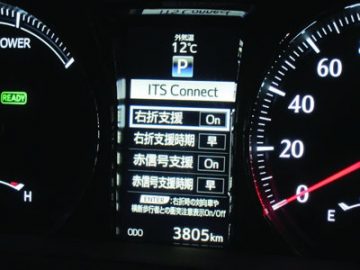 The Japanese new vehicle fleet’s uptake of Intelligent Transport Systems using the 760 megahertz frequency is causing headaches for New Zealand importers.
That’s because the frequency, which allows vehicles to communicate with each other, is already used in New Zealand by mobile phone providers and it’s illegal to transmit radio signals on it.
It could potentially cause chaos if the two technologies were to clash trying to use the same frequency.
However, efforts from organisations like VIA and the Ministry of Transport have brought the issue to the attention of policy makers and manufacturers alike.
VIA policy analyst Kit Wilkerson says no one was aware of the problem initially but now New Zealand is at the forefront of discussions on how to sort it out.
“The discussion is taking place prior to the manufacture of the vehicle, rather than fighting the New Zealand Government to allow us to import the vehicles.”
The discussions have prompted some potential solutions from the companies involved, Wilkerson says.
“Some of the chip makers are looking at either dual solutions or equal but different solutions.

“Some cars for the Japanese market with a 760MHz chip will also have 5.9MHz available. Whether we remove one chip and put the other one in, we’ll have to see.
“The other favourable news is some of the manufacturers are looking at building dual-band devices that switch frequencies based on geographic location and the vehicle.”
Wilkerson says VIA is working with Spark to import one of the vehicles for testing.
“They can import one. They are the licence holder for the frequencies. We can experiment with deactivating it and see what the actual impact will be.”
But there could still be issues with 760 MHz vehicles coming into the market next year, Wilkerson says.
“Unfortunately our advice from last year is still the most current. Some models are still going to have it available in 2018.
“If someone does make the business decision to import one, they need to make sure that technology is disabled or removed.”
Wilkerson at the forefront
Kit Wilkerson’s membership of an International Standards Organisation technical committee could help avoid potential problems caused by new technology.
The committee, which is investigating different types of dynamic mapping, is at the forefront of advances in autonomous and connected vehicle technology.
It provides access to national policy leaders and OEM representatives which, looking back, would have been helpful when addressing the 760MHz issue.
“Had we been part of these discussions five or ten years ago we could have seen this 760MHz issue coming,” Wilkerson says.
“We could have negotiated with Japan to block off that part of the spectrum.
“The telecommunications companies still would have been able to buy chunks. Then New Zealand consumers would have been able to take advantage of this technology being developed in Japan.”
Now the industry has the opportunity to be at the cutting edge of discussions, he says.
“We’re looking forward to being more proactive in the future.”
Being part of the ISO committee does mean plenty of international travel for Wilkerson, who recently attended a meeting in Texas.
But it’s important to be there in person, he says.
“To be fair, a lot of politics goes on so it would be really difficult over Skype.
“The guys representing Japan are really pushing the technology being developed for autonomous vehicles in Japan. It’s the country that has the most advanced plan.
“There’s push-back from the Europeans resisting change, representing the European OEMs who may not want to adopt the Japanese plans.”
Positioning New Zealand as a neutral broker makes for some interesting discussions, he says.
“New Zealand is unique as it has no vested interest: we do not manufacture vehicles but we take vehicles from both European and Japanese manufacturers. It puts us in an interesting place.
“The Japanese auto agenda has links to 760MHz while other manufacturers use 5.9MHz.
“We don’t quite know where that’s going.”
Despite all the positioning, creating critical mass will be necessary before the technology is usable, he says.
“You can’t rely on it to tell you a car is coming around the corner if only 0.5% of cars have it.”
New Zealand is in a favourable position to take advantage of the latest technology trends, Wilkerson says.
“There’s lots of early adopters. There’s so many people throwing money at connected and autonomous technology.
“It’s about building on the little successes.”
ITS systems can be disabled
 Intelligent Transport System units that conflict with local radio spectrums by broadcasting on the 760MHz range can be deactivated, Toyota New Zealand says.
In New Zealand the 760MHz band is owned by telecommunications companies for 4G networks. Toyota is fitting the technology to cars sold new in Japan.
If active, the transmitters would make the car an illegal import.
The system that creates the issue is Toyota’s ITS Connect unit, which is an optional extra on cars fitted with the brand’s “Safety Sense” suite of intelligent safety technology – a package of items such as autonomous emergency braking and lane departure warnings.
It is available in only a small number of models but one is the high-volume Prius.
Safety Sense is also becoming more widespread. Toyota Japan confirmed last month all Vitz would be fitted with Safety Sense from this year.
As of October 2016, around 50,000 vehicles carried the ITS Connect system.
Toyota NZ spokesperson Morgan Dilks says the brand has been working with the Ministry of Transport and VIA to provide access to cars in Japan for testing and confirmation of how the system works and how it can be disabled.
The system can be identified through a dash screen menu and disabling it is as simple as cutting a wire – although access is reported to be difficult.
It does not affect other safety systems.
“The ITS system (which has the conflicting frequency in New Zealand) can be disabled by removing the power input to the ITS computer in the vehicle,” Dilks says.
“This is detected on the multi-display when the ignition is turned on.
“Disabling the system through cutting the power input does not impact on any of the vehicle’s other safety features.”
But it might not always be that simple, Dilks says.
“Currently, while the ITS system can be disabled in isolation without affecting other vehicle features (such as safety), ITS is manageable.
“In the future, if ITS systems are more tightly integrated, then it could be more difficult to disable in isolation.”

Join the conversation