
Three EVs get Euro NCAP ratings
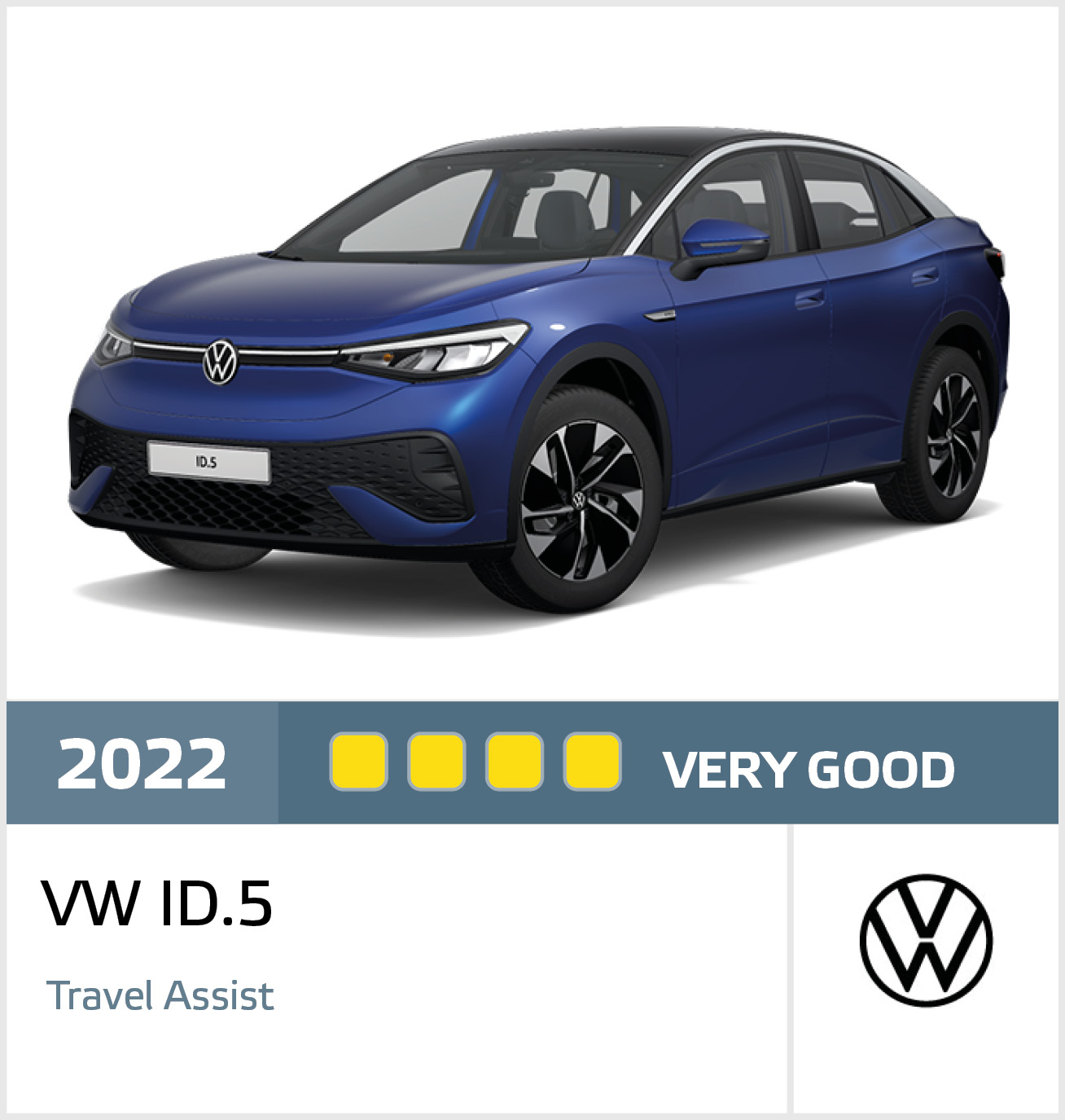
The electric VW ID.5 gained a ‘very good’ rating in latest Euro NCAP Assisted Driving gradings.
The Polestar 2 upgraded its Pilot Assist system via an over-the-air update to improve its steering support, which takes its rating from ‘moderate’ to ‘good’; and an ’Entry’ rating for the Jaguar I-Pace reveals it delivers essentials for assisted driving but lacks more advanced features.
The three EVs were among four new cars featured with ‘Level 2’ Assisted Driving systems, says Thatcham Research which encourages drivers to reap safety and comfort benefits of ‘driver assist’ systems.
The gradings are based on dedicated protocols designed to encourage the safe adoption of Assisted Driving technology.
The safest systems should provide a good balance of performance across three key areas – the technical competence of the system and level of assistance it can safely offer, the feedback given to the driver to ensure they remain engaged and aware of their responsibilities, and how the car’s safety back-up mechanisms function in the event of an emergency, Thatcham Research explains.
The VW ID.5’s Travel Assist system was rated ‘very good’, scoring 76% for assistance competence and 85% for safety back-up. It scored full marks in assisting the driver in guiding the vehicle through motorway curves and for its steering interactivity when altering lane position, says Thatcham Research chief research strategy officer Matthew Avery.
The ID.5 performed very well in all areas, especially in terms of speed adaptation when approaching roundabouts, junctions, and corners.
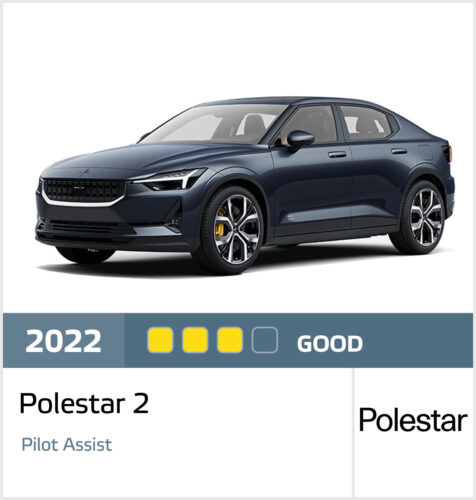
The Polestar 2’s Pilot Assist is another well-balanced system receiving a ‘good’ rating, in part due to improvements made via an over-the-air (OTA) update since the vehicle was rated in 2021. This allows connected vehicles to receive important updates automatically, making sure that the consumer is always driving the safest version of the manufacturer’s car.
Assessments also revealed that the Polestar 2 successfully balances driver steering input with lane guidance to promote co-operative driving and mitigate against driver over-reliance. However, the system is limited in other areas such as not being able to adapt speed for road features and its AEB system not responding as effectively to stationary cars.
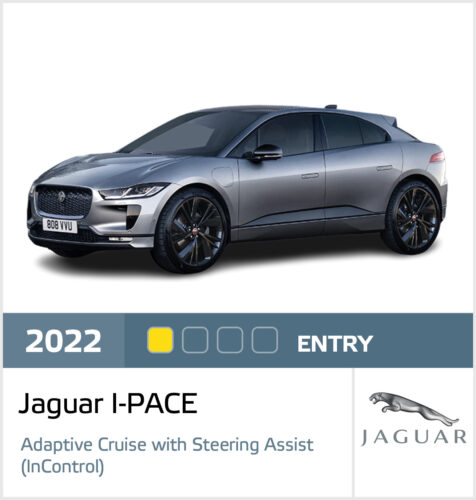
In comparison, the Jaguar I-Pace achieved an ‘entry’ level score. Although the driver engagement score was very good, meaning the system and brand marketing does not encourage over-reliance, it delivers a balanced assisted driving experience but lacks more advanced features.
The I-Pace is the only vehicle to feature in this round of testing that does not cease driving while the assisted driving mode is engaged if the driver becomes unresponsive. Instead, the vehicle simply withdraws steering support but maintains the Adaptive Cruise Control function, as opposed to guiding the vehicle to a controlled stop.
“Some of the vehicles have performed very well in this latest round of testing,” says Avery.
“It is interesting to see the improvements Polestar has made to its vehicle using OTA updates, an excellent means of tweaking performance for the better overnight.
“It is also becoming ever more apparent that electrification and automation go hand-in-hand,” he adds.
“We would strongly encourage drivers to use this technology, it is more than just a feature count, it protects drivers and other road users alike with numerous safety benefits, with the best systems automatically adapting to speed limits and traffic, keeping drivers in lane, and protecting your blind spots.”
Join the conversation