
Time for EVs in agriculture
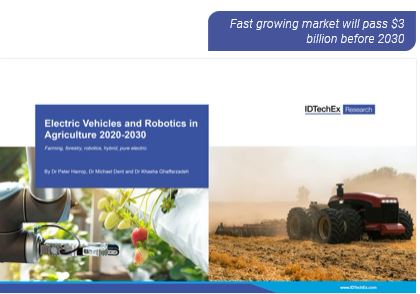
Now is the time for farm vehicles to electrify.
So says IDTechEx chairman Dr Peter Harrop, quoting the new 215-page IDTechEx report Electric Vehicles and Robotics in Agriculture 2020-2030.
Even in the most advanced countries, few farms can provide power to fast-charge a Tesla or an electric tractor, let alone large farm vehicles, he says.
All the same, many agricultural vehicle makers are going electric because the charging capability, affordability and other factors are rapidly falling into place – just as they are for road vehicles, Harrop explains.
Farm electricity can now follow the robots. Renovagen sells a microgrid that, from the back of a farm truck, unrolls its solar cells like a carpet along a field.
And eWind develops tethered drones generating similar 30kW levels of electricity from the wind, specifically targeting farmers.
As with cars, we have had the phase of electric variants of farm vehicles based on existing platforms and therefore not very successful, but Kubota and John Deere newly have “born electric” concept tractors reading to the strengths by being robotic with triangular tracks, Harrop points out.
Lower cost of ownership is compelling but lower up-front cost is the killer blow, part of the reason why small outdoor and greenhouse agri-robots are all electric; price parity comes first with small vehicles.
They pick fruit more gently, minimise poisons, and increase yields.
The report embraces farming, forestry and turf care in the form of manned EVs and robotics.
The 34-page executive summary and conclusions has a critical appraisal listing 14 forces on the industry, seven reasons for going electric, two infograms of the future farm, main trends such as precision and ultra-precision farming, 18 primary conclusions with tables and graphics, adoption timelines, and a patent trend graph.
The Introduction then looks at problems, needs, emissions, water shortage, food demand increase and change in mix, regional differences in crops and approaches, crop yield and farmer age, wage and tractor purchasing trends.
More than 70 organisations are making or developing electric and robotic vehicles for agriculture, forestry, and turf EVs are compared.
Specific comparisons include lawnmowing robots and weeding robots for farms, for example. Electric tractors are a focus with seven illustrated case studies. Planters, transporters, and forestry are also illustrated and there are critical comparisons throughout.
Autonomy is also covered.
Visit www.IDTechEx.com/AgriEV or contact Research@IDTechEx.com for more information.

Join the conversation