
Used EV batteries for JLR renewable energy storage
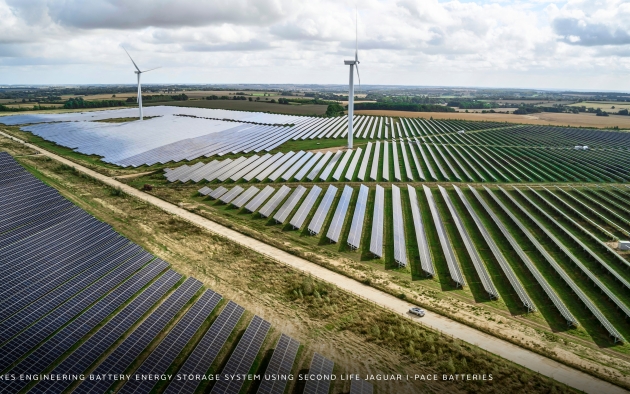
Jaguar I-Pace batteries will be used to store renewable energy in a Jaguar Land Rover (JLR) collaboration with Wykes Engineering.
The two companies will develop one of the largest energy storage systems in the United Kingdom to harness solar and wind power using second life EV batteries.
The Battery Energy Storage System (BESS) will help decarbonise the National Grid and deal with peaks in demand, says JLR.
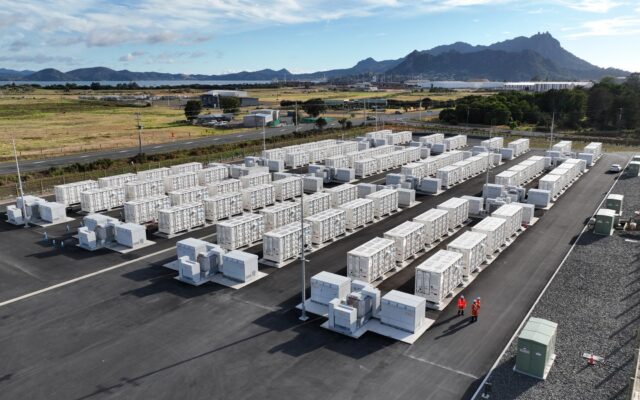
About 30 second life Jaguar I-Pace batteries used in the one Wykes Engineering BESS can store 2.5MWh of energy – enough to power around 250 homes for a day.
The batteries supplied have been taken from prototype and engineering test vehicles, and JLR aims to supply enough batteries to store a total 7.5MWh of energy – sufficient to power 750 homes for a day – by the end of 2023.
After this point more containers can be created to house additional second life batteries removed from used production vehicles in the future.
Batteries are removed from the Jaguar I-Pace and slotted into racks in containers on-site.
Each BESS, which is linked to an advanced inverter to maximise efficiency and manage energy, is capable of supplying power direct to the National Grid during peak hours as well as drawing power out of the grid during off-peak hours to store for future use.
Once the battery health falls below the required level for these second life use cases, JLR will recycle the batteries so that raw materials can be recovered for re-use as part of a true circular economy.
“Our EV batteries are engineered to the highest standards and this innovative project, in collaboration with Wykes Engineering, proves they can be safely reused for energy sector application to increase renewable energy opportunities,” says JLR strategy and sustainability executive director François Dossa.
“Using the 70-80% residual capacity in EV batteries, before being recycled, demonstrates full adoption of circularity principles.
“Working together with industry-leading partners, we are developing a complete EV ecosystem, from batteries to charging, supporting our net-zero transformation.”
Wykes Engineering managing director David Wykes says: “One of the major benefits of the system we’ve developed is that the containers are connected to the grid in such a way that they can absorb solar energy that could otherwise be lost when the grid reaches capacity.
“This excess energy can now be stored in the second life I-Pace batteries and discharged later. This allows us to ‘overplant’ the solar park and maximise the amount of power we generate for the area of land we are using.”
The reuse of vehicle batteries forms part of JLR’s ambition to adopt circular economy principles based on a “Use Less, Use Longer, Use Again” philosophy to limit the use of virgin materials.
The initiative supports JLR’s drive to achieve carbon net zero by 2039 across its supply chain, products, and operations under its “Reimagine” strategy.
Second life battery supply for stationary applications, like renewable energy storage, could exceed 200GWh annually by 2030, creating a global value exceeding US$30 billion.


Join the conversation