
Video: A look back at EV beginnings
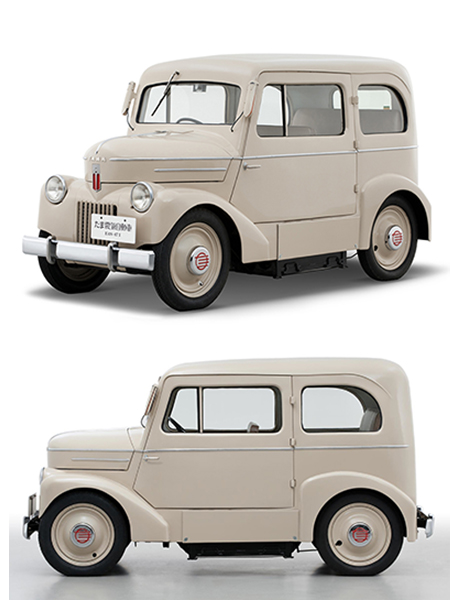
Hyundai and Nissan have been exploring their EV roots.
Both have released historical perspectives around their EV developments, Hyundai’s going back 30 years and Nissan talking about its first EV truck the Tama, produced in 1948.
In 1947, two years after WWII, Japan was suffering from an acute shortage of oil, goods and food but the electricity supply had a surplus since there were almost no home appliances or bulk users of electricity at the time.
Engineers used this situation to create the first Nissan EV – a prototype two-seater EV truck (500kg load capacity) with a 4.5hp motor and a new body design. It was called the ‘Tama’ in reference to where the factory was based.
The design and construction employed many distinctive ideas such as its battery compartments within the cabin floor.
In the first EV performance tests by Japan’s Ministry of Commerce and Industry in March 1948, the Tama took top honours.
Nissan says the spirit of challenge demonstrated by those engineers encapsulates Nissan’s DNA today, including its focus on the popular Nissan Leaf and related connectivity such as vehicle to grid (V2G) technology.
Meanwhile, Hyundai says that following its early experiments with EVs in the 1990s and FCEVs in the 2000s, it became one of the first manufacturers to start mass producing alternative powertrain vehicles.
Its first pure electric car, the Sonata Electric Vehicle, was unveiled in 1991.
A concept based on the Sonata sedan, it featured a lead-acid battery and offered 71km range and a 60km/h top speed.
In 1992, an EV based on the Excel featured 100km range and 100km/h maximum speed, followed te next year by a second Sonata-based EV with 140km range and a 121km/h to speed.
Hyundai’s Research and Development Centre in Namyang, South Korea, opened in 1995, leading to development of Hyundai EVs with nickel-metal hydride batteries, such as the Accent EV concept with390km range and a 140km/h top speed.
Experiments with hybrid propulsion systems started then, the company’s first hybrid-electric car, the FGV-1 concept, debuted at the 1995 Seoul Motor Show.
Since then it began developing fuel cell vehicles in 1998, and introduced its first prototype fuel cell car, the Santa Fe FCEV concept, in 2000 with a 350-bar hydrogen tank, 75kW fuel cell and 230km range.
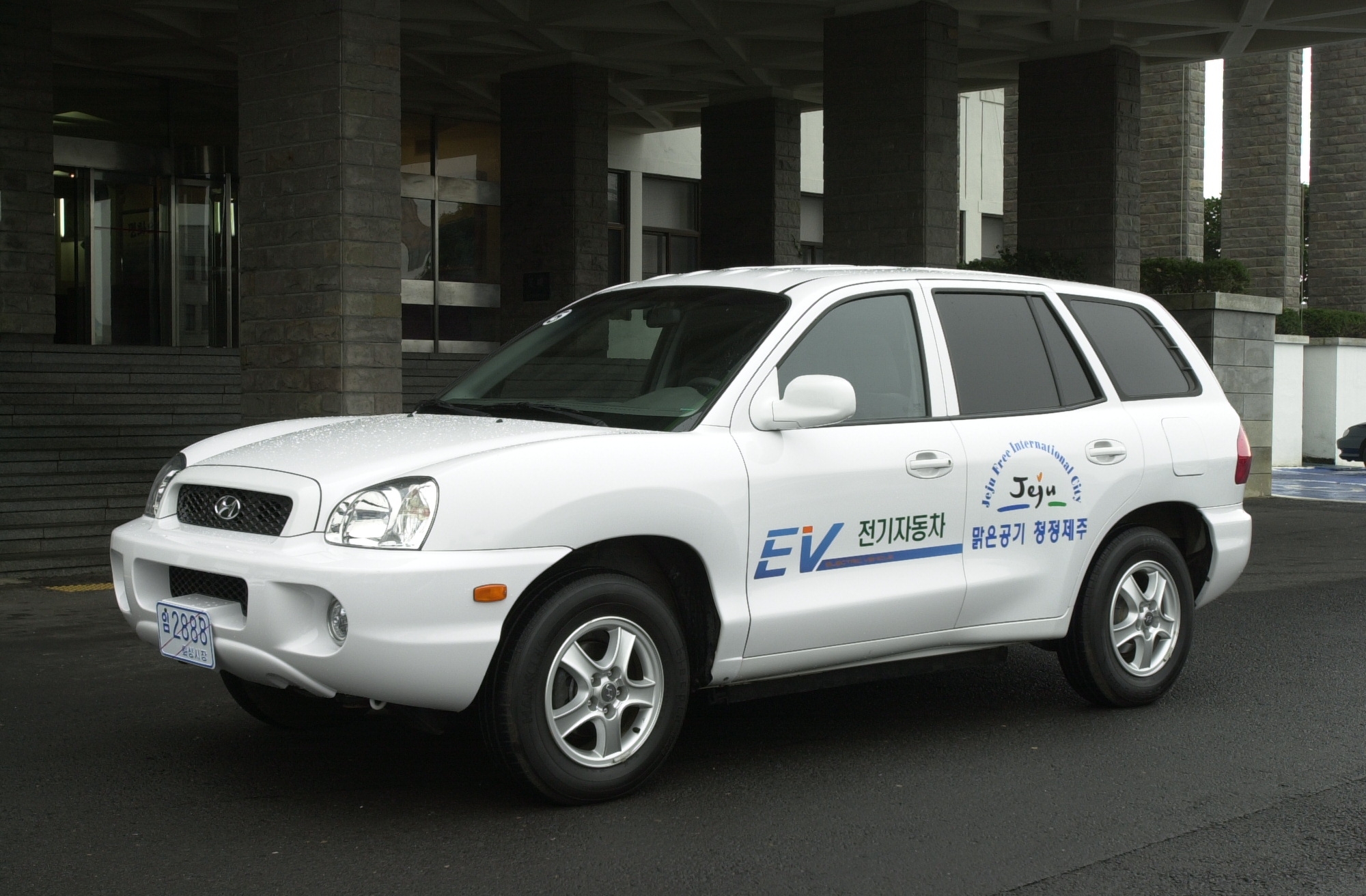
Hyundai Santa Fe EV
The Tucson FCEV was announced in 2004, having a new lithium polymer battery and technical advancements including an 80kW fuel cell stack and 299km range.
Hyundai launched the Avante LPI Hybrid production model in 2009, the first powered by an internal combustion engine (ICE) built to run on liquefied petroleum gas (LPG).
Following two decades of extensive research and innovative concepts, Hyundai turned its focus towards making electric production models a reality during the 2010s.
BlueOn, its first production electric car, was launched in Seoul in September 2010 with 140km range and a 130km/h maximum speed, recharging in six hours, with sales limited to South Korea.
Further developments followed, the Ioniq introduced in 2016, offering separate hybrid, plug-in hybrid and full electric powertrains in one body type.
Then came the Nexo FCEV and the Kona Electric.
Today, more than three-quarters of Hyundai’s fleet is available as an electrified version.
It aims to become one of the top three providers of EVs globally by 2025.

Join the conversation