
Video: Kea Aerospace does solar stratospheric flight
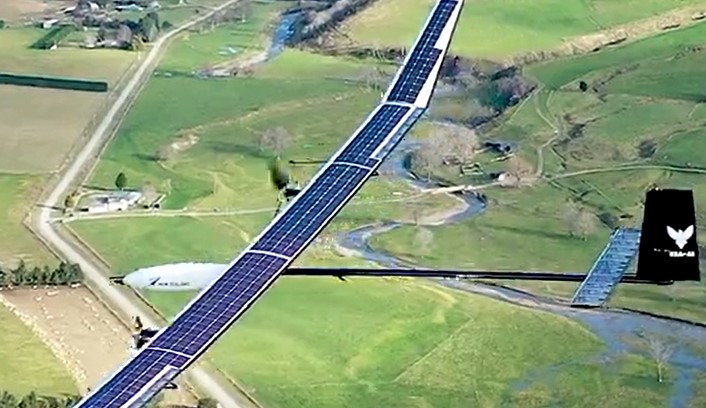
Christchurch-based Kea Aerospace has done a solar-powered flight to the stratosphere.
The Kea Atmos Mk1b unmanned aerial vehicle (UAV) reached17,155.3 metres (56,284 feet) in Kea Aerospace’s Special Use Airspace south of Banks Peninsula.
The UAV left the Tawhaki National Aerospace Centre at 8:07am on Saturday, February 8 and flew for eight hours 20 minutes, ranging 35km (18.9 nautical miles) from the take-off area and covering 420km before landing at 5:27pm, says Kea Aerospace.
Using solar power eliminates the need for refuelling, significantly reducing the Kea Atmos’ carbon footprint, the company says.
“The aircraft is designed to carry payloads for earth observation, telecommunications and technology testing.
A key focus is on aerial imagery applications, including environmental monitoring, maritime domain awareness, precision agriculture and disaster response, says Kea Aerospace.
“This stratospheric flight puts Kea Aerospace alongside just a handful of other international companies that can achieve solar-powered flight to high altitudes,” says Kea Aerospace chief executive Mark Rocket.
“It’s not an easy enterprise to balance the aerodynamic, power and weight allowances for this type of aircraft, whilst flying in conditions of -50 degrees Celsius with only 10% of the air density we experience at sea level.
“Kudos and congratulations to our CTO, Dr Philipp Sueltrop and the Kea Aerospace team, it’s a phenomenal result to join the rarified stratospheric club.”
The Kea Atmos Mk1 is a 12.5 metre wingspan aircraft weighing 40kg anddesigned for dawn to dusk one-day flight missions.
This year, Kea Aerospace says it will continue doing stratospheric flights with Kea Atmos Mk1 aircraft, flying payloads for government and commercial customers.
In 2025, Kea Aerospace will also start the design phase for the larger Kea Atmos Mk2 aircraft aimed at multi-month endurance flights, adding the company is talking with new investors.
Rocket says: “We have been extremely well supported by entities such as the Taawhaki National Aerospace Centre, Civil Aviation Authority, Airways, Callaghan Innovation, the New Zealand Space Agency and the Ministry of Business, Innovation and Employment.”

Join the conversation