
Volvo to re-use EV batteries
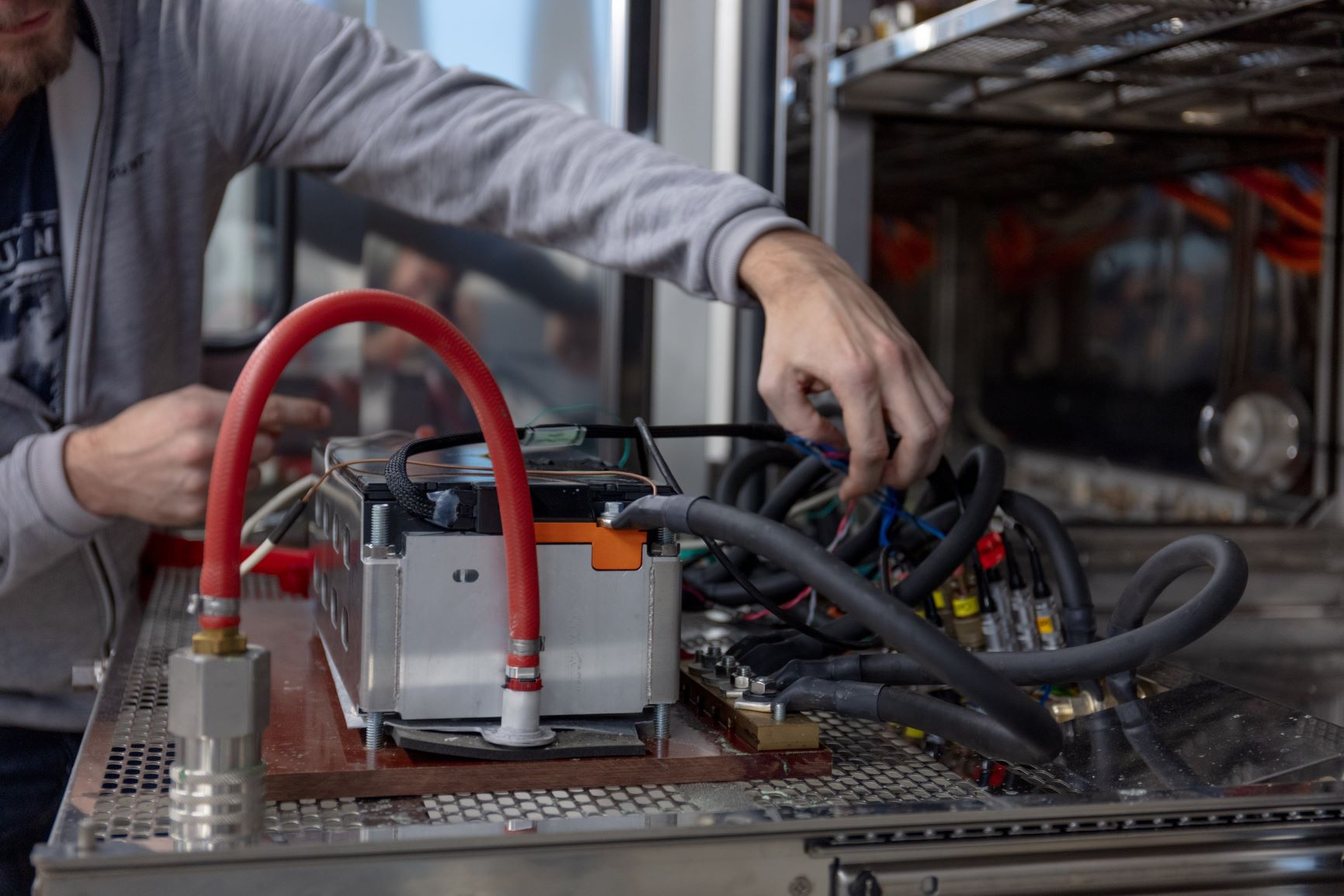
Volvo Cars has launched new initiatives to re-use EV batteries to store solar and hydro power and charge e-bikes.
The aim is to lower CO2 emissions and save billions by becoming a circular business (recycling) by 2040.
Volvo Cars wants to save about a billion Swedish Krona annually (NZ$164 million) and make reductions of 2.5 million tonnes in carbon emissions from 2025 using circular business principles.
It will create closed material loops for emission-heavy materials such as steel and aluminium, as well as remanufacture, repair, reuse and refurbish parts.
“Volvo Cars has one of the most ambitious climate plans in the car industry, and if we are to reach our goals, we need to embrace the circular economy,” its global sustainability head Anders Kärrberg says.
“This requires us to rethink everything we do and how we do it. We put a strong focus on integrating sustainability into the way we think and work as a company, and we are making it as important as safety has always been to us.”
Volvo Cars believes every part in its cars should be designed, developed and manufactured to be used and re-used, either by the company or its suppliers.
By focusing on resource efficiency and retaining the value created in materials and components for as long as possible during the lifecycle, the company wants to optimise the use of materials, components and cars and eliminate waste in the process.
This will lead to financial savings and new revenue streams as well as significantly lower its environmental impact.
Already Volvo Cars remanufactures parts such as gearboxes and engines to make better use of material and reduce emissions.
In 2020, around 40,000 parts were remanufactured, saving nearly 3000 tonnes of CO2 emissions.
By 2025, Volvo Cars aims to more than double its remanufacturing business.
The company recycled 95% of its production waste last year – which included 176,000 tonnes of steel, avoiding the generation of nearly 640,000 tonnes of CO2.
In 2020, Volvo Cars became a member of the Ellen MacArthur Foundation, which is the world’s leading circular economy network.
“The circular economy offers companies a framework for viable long-term growth that also benefits society and the environment,” the foundation’s network lead Joe Murphy says.
Together with suppliers and partners, Volvo Cars is exploring the potential in second-life applications for its high voltage EV batteries.
An example is the collaboration with BatteryLoop, a company within the Swedish Stena Recycling Group that re-uses batteries from the automotive industry.
BatteryLoop and Volvo Cars use batteries from electrified Volvo cars for a solar-powered energy storage system.
Starting in April, the system will power charging stations for electrified cars and e-bikes at Swedish hygiene and health firm Essity’s business centre outside Gothenburg.
In a similar project, Volvo Cars, Comsys AB – a Swedish cleantech company, and Fortum – a European energy company, are engaged in a commercial pilot project.
It aims to increase supply flexibility at one of Fortum’s hydropower facilities in Sweden while contributing to a second life for EV batteries at the same time.
Battery packs from Volvo plug-in hybrid cars will serve as a stationary energy storage unit, helping to supply so-called ‘fast-balancing’ services to the power system.
Through these and other projects, Volvo Cars is investigating how batteries age when re-used in second-life applications that have significantly less aggressive cycling compared to in-car use.
They also allow the company to gain more knowledge about the commercial value of batteries after use in cars and identify potential future revenue streams.


Join the conversation