
VW aims to halve EV battery costs
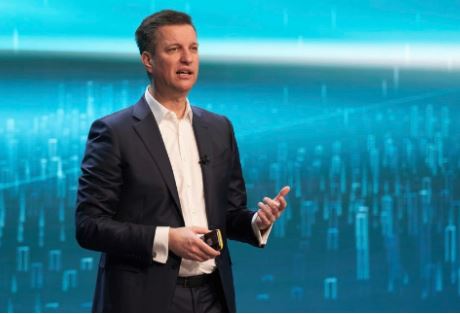
Volkswagen plans to build six EV battery cell factories by 2030, cut battery costs by 50% by 2023, produce a new “unified” battery cell and establish 18,000 fast-charging points in Europe with partners.
That’s the core of VW’s first Power Day (similar to Tesla’s Battery Day) where its EV battery and charging plans were outlined up to 2030.
“We aim to reduce the cost and complexity of the battery and at the same time increase its range and performance”, VW Group technology board member Thomas Schmall says.
“This will finally make e-mobility affordable and the dominant drive technology.”
VW’s technology roadmap intends reducing battery complexity and cost to make EVs attractive and viable for as many people as possible, it says.
As part of that In Europe alone, six gigafactories with 240GWh total production capacity are to be established by the end of the decade.
Premiums cell production will be concentrated at Northvolt Ett in Sweden starting 2023 which will be expanded up to 40GWh, with Salzgitter in Germany planned as a second gigafactory producing the unified cell from 2025 and with up to 40GWh capacity annually – both powered from renewable resources.
Potential sites and partners are being considered for the other factories.
Collaboration with suppliers will be intensified to recycle up to 95% of raw materials, while partnerships with energy companies BP (Britain), Iberdrola (Spain) and Enel (Italy) will help provide 18,000 public fast-charging points to expand the European network five-fold, VW says.
It is also pursuing expansion of the public fast-charging network globally – especially in the US (3500 by the end of this year) and China (17,000), adding that energy management will become a new business sector.
“E-mobility has become core business for us,” VW Group management board chair Herbert Diess says.
The new unified cell is set to be launched in 2023 and will be installed across VW Group brands in up to 80% of all its EVs in 2030.
“On average, we will drive down the cost of battery systems to significantly below 100 euros per kilowatt hour,” Schmall explains.
Advances in storage capacity and fast-charging capability are expected in addition to cost benefits.
VW also intends integrating the electric car in private, commercial and public energy systems in the future, feeding green electricity from the solar energy system stored in the vehicle back into the home network if needed, VW EVs expected to have vehicle-to-grid (V2G) from 2022.
The company will also offer a complete package with all modules and digital services – from the bidirectional wall box to energy management.
The VW Group is adhering to its strategic financial targets and continues to aim for a capex ratio of around 6% by 2025 and an annual clean net cash flow of more than 10 billion euros in its core automotive business.
Join the conversation (1)
Standardising on battery size and layout seems an obvious way of extending the range and utility of EVs even without further advances in battery or vehicle tech.
The idea being to have standardised battery structure and vehicle mounting and connection systems so that it becomes possible to pull into a (petrol) station and swap flat batteries for charged ones. A process that could take about the same time as filling a fuel tank.
The vehicle owner would buy the first set of batteries as part of the car cost (as at present) thereafter the batteries would enter a pool owned by a company. The company would look after, charge, and test batteries paying for the service by a small supplemental charge on swapping. It would require a network of exchange points but this already exists in the form of vehicle s we vice stations which would need to be upgraded with equipment to exchange, charge and store the batteries.
We already have all the technology required, we just need to organise it and standardise on battery configuration.
Bigger vehicles might have 2 or more battery banks but the principle remains the same. You roll up to a station, a machine removes the battery (I see it being from underneath the vehicle) and installs a fresh one. Pay for the swap and you re off again.
There is a lot of logistics to be worked out but experience will soon teach us.
Is this what VW are talking about with their “unified cell” concept?
I think the scheme above would remove the last sustantial restraint on EV acceptance.