
WattEV to deploy 370 Tesla Semis in major California electric freight rollout
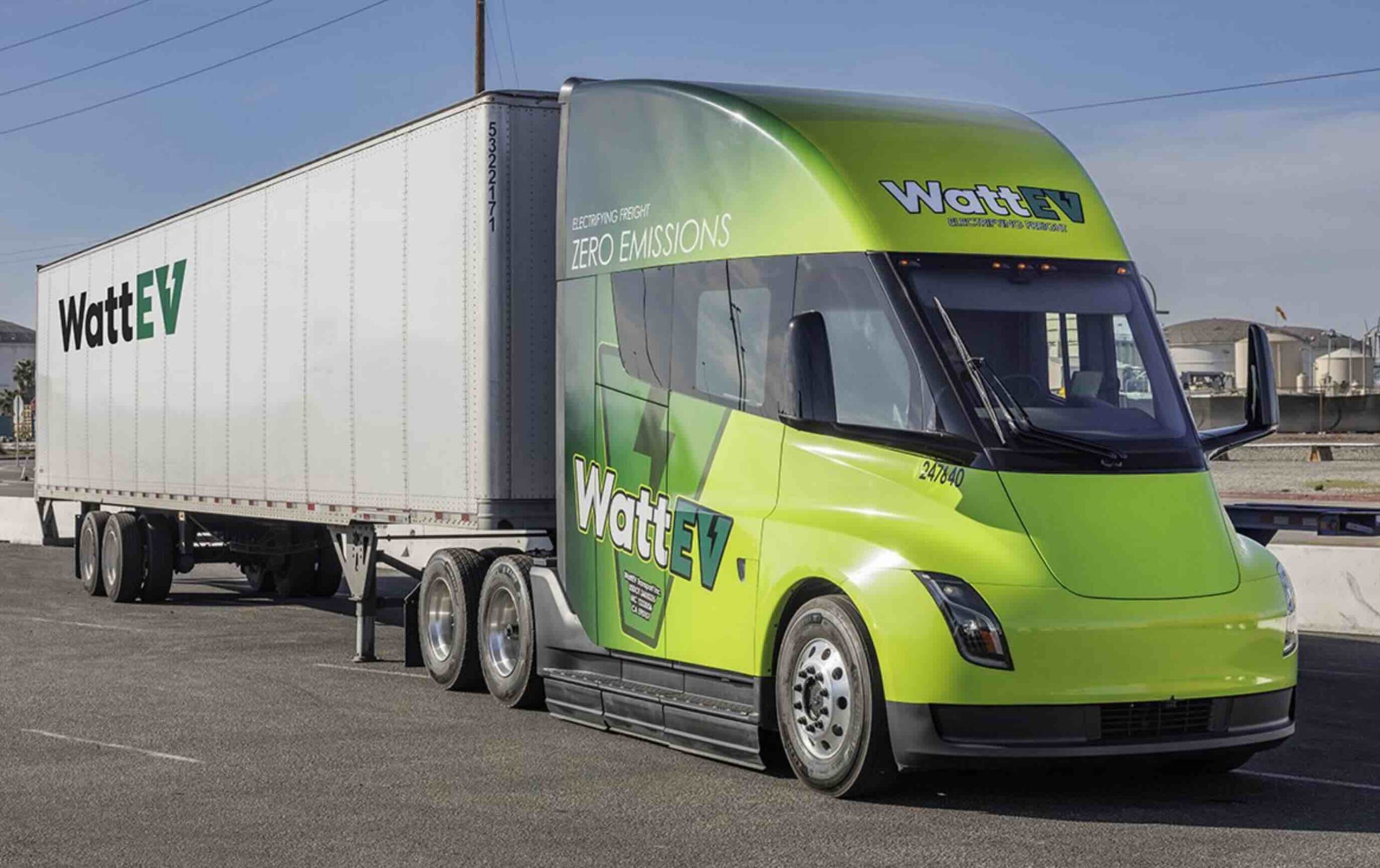
US-based electric truck service provider WattEV will deploy 370 Tesla Semi electric trucks as part of what it says will be the largest electric freight network connecting Northern and Central California.
The company says the first 50 trucks are scheduled for delivery in 2026, with the full fleet expected to be operational by the end of 2027.
More than 300 of the vehicles will be deployed under a joint programme with the Port of Oakland, supported by new megawatt-class charging infrastructure.
WattEV plans to open truck-charging stations at the Port of Oakland and in Fresno, equipped with Tesla’s Megawatt Charging System, which can deliver about 480km of range in around 30 minutes.
Additional sites are planned in Stockton this year, with a Sacramento depot expected to begin construction in 2026.
The new facilities will extend WattEV’s existing network in Southern California, which includes depots at the Port of Long Beach, San Bernardino, Gardena, Bakersfield, Vernon and Oxnard.
The company says a further 15 sites are under development as part of a broader push toward nationwide operations.
WattEV chief executive Salim Youssefzadeh says the Tesla Semi was selected following a competitive process.
“We selected the Tesla Semi based on cost, performance and availability after issuing a public request for proposals,” he says.
“This deployment is a major step toward WattEV’s national expansion into long-haul electric transportation. We intend to be the operator that builds the infrastructure, the fleet, and the logistics platform for electrified freight delivery at scale.”
WattEV says its model combines vehicle deployment, charging infrastructure and leasing services to reduce upfront costs for operators.
The company says lower energy costs from electric drivetrains are expected to reshape long-haul freight economics, with diesel prices remaining a key factor in fleet decisions.
“Our electrified freight solutions allow us to deliver goods at better economics compared to diesel today, and as energy costs diverge further, the economic case only strengthens,” Youssefzadeh says.
WattEV says its existing fleet of 75 electric trucks has already logged more than seven million freight miles across Southern California’s drayage and middle-mile operations.
Earlier this month, Tesla said its first Semi truck rolled off a high-volume production line at a dedicated 158,000 square metre facility in Nevada, marking a step toward large-scale manufacturing of the electric heavy vehicle.
As part of the specifications published on Tesla’s website, the Semi will be offered in two main variants. The standard-range Semi has an estimated range of about 325 miles (around 523km) and a gross combination weight rating of 82,000lb (about 37,200kg). Tesla lists a curb weight of under 20,000lb (less than about 9,070kg).
The long-range Semi extends the estimated range to about 500 miles (around 805km), with the same gross combination weight rating and a listed curb weight of 23,000lb (about 10,430kg).
Tesla is quoting customers US$290,000 for the 500-mile long range version of the Semi electric truck, according to pricing documents obtained by electric vehicle news outlet Electrek.


Join the conversation