
Where do dead batteries go?
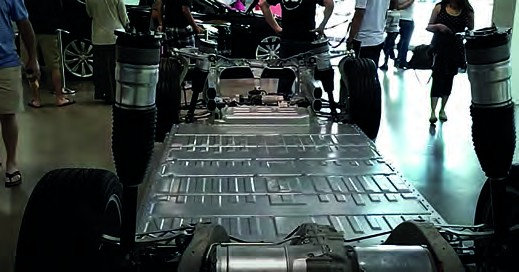
This story first appeared in the February issue of EVtalk – CLICK HERE to download the magazine FREE
With electric vehicles increasing in New Zealand, will we end up with piles of dead batteries?
That’s the question readers like Palmerston North city councillor Brent Barrett want answered.
He was pleased to read in our last issue about the import breakthrough for EV batteries achieved by the Imported Motor Vehicle Industry Association (VIA).
But he says councils would be in a stronger position to promote EVs if they had the confidence “we weren’t going to end up with heaps of dead batteries around our cities in a few years’ time”.
EV batteries can be refurbished and returned to use in EVs, VIA technical manager Malcolm Yorston says.
“Like Brent, I think we are all concerned about our environment and want to minimise or completely eliminate any environmental damage that could be caused,” Yorston says.

“We need to do our best to ensure that these valuable resources do not go into the waste stream.”
Yorston says people are already working on refurbishing EV batteries for reuse and, as battery technology keeps improving, they will become more sophisticated – lasting longer, reducing in size and weight, and increasing in capacity and performance.
If battery health degrades to the point it is no longer viable for use in an EV, the battery can be repurposed to last for many more years by storing power generated from solar cells on the house roof or small wind turbines, he says.
They can also be used for back-up power storage. One electricity company has been talking about using trailer-loads of used EV batteries as a form of portable power generator, for instance.
“Once the batteries have degraded to the stage they are unfit for storage purposes, they will be able to be recycled into their component elements,” Yorston says.
“There are opportunities for people to recycle and reuse them.”
There are a “plethora” of ways of checking battery health to see if EV batteries can continue or whether they need to be repurposed or recycled, he says.
“People shouldn’t just rely on one application.”
There will be ways of exporting batteries for recycling or they could be reused or recycled here.
“There are United Nations conventions on the shipping of lithium-ion batteries but enterprising individuals are already looking at how to effectively and safely manage the shipping to recycling facilities.
“I am sure others will be looking at adding value onshore by reclaiming the component elements and either exporting these or reusing them in New Zealand.”
An expert in the battery power and storage field, Carl Barlev of Blue Cars Auckland, has been refurbishing EV batteries for the past two years and says they are too valuable to just dump.
They can often be reused and after a few years of use can probably gain another five years of life as power storage, he says.
“That is just delaying their disposal but they contain valuable metals such as lithium, copper and aluminium which can be separated out.”
Barlev says he’s had “no problem” sending dead batteries to China for recycling.
Although recycling could perhaps be done in New Zealand, Barlev believes it might not happen here because China can do it easily and more cheaply.
By rebalancing EV batteries or replacing cells and modules in battery packs with better ones, Barlev says he can often recover 20% of lost range and extend the battery pack’s life another two to four years.
“I see no problem (with batteries) whatsoever.”

Join the conversation