
Women will drive switch to EVs – study
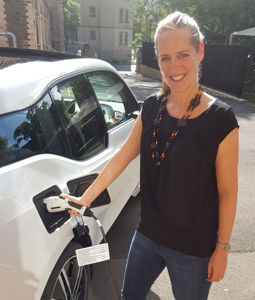
Highly educated women are an untapped but potentially lucrative market for electric vehicle sales.
That’s because they have greater environmental and fuel efficiency awareness than men, according to a new study by researchers at the University of Sussex and Aarhus University in Denmark.
The research also recommends the newly retired be targeted for EV promotion. Pensioners have high car ownership, drive short distances, have high budgets for car purchases and are less interested in design – making them ideal EV owners, the study says.
“The decisions people make about the forms of transport they use or purchase can transcend purely economic self-interest and logic,” study lead author and University of Sussex Centre on Innovation and Energy Demand (CIED) director professor Benjamin Sovacool says. “They can be shaped by a diverse range of factors ranging from gender, education, occupation, age and family size.
He says the sooner EV manufacturers and policymakers understand how these factors influence the transport decisions people make, the quicker people will switch to more sustainable transport modes.
The study found that women drive fewer kilometres daily, expect to pay less for their next car and have considerably less experience driving EVs than men.
Men give more importance to speed and acceleration and design and style, while women rank ease of operation, safety, running costs and environmental impact – making EVs a better fit for them.
Men (mainly 30-45) with higher levels of education, working in the not-for-profit sector or academia, are more than twice as likely to own EVs than women or retirees.
Environmental benefits are not the key reason they buy EVs. Instead, they emphasised comfort or acceleration.
Researchers also highlighted that EVs have an image problem, families preferring large, conventional cars symbolising welfare and status.
Sovacool says policy mechanisms to increase EV ownership, such as a carbon tax or discounts, may not be particularly effective because they are gender or demographic neutral.
“A rapid and comprehensive transition to electric mobility will require a combination of technological, regulatory, institutional, economic, cultural and behavioural changes that together transform the sociotechnical systems that provide energy or mobility services.
“Shifting from a petrol or diesel car to an electric vehicle is not simply a choice between different vehicle models, it is a behavioural adjustment problem to adapt to the different restrictions of an electric vehicle such as its range and availability of charging.”
The study was held in Denmark, Finland, Iceland, Sweden and Norway.
“Our study offers insight into the Nordic context, but can also show businesses and industry elsewhere how to rethink their strategy when it comes to marketing EVs,” Johannes Kester from Aarhus University says.
To read the study visit here.

Join the conversation