
World’s first hydrogen-powered train marks ‘revolution’
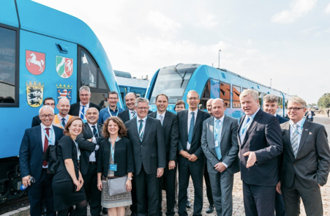 The world’s first hydrogen fuel cell train has hit the tracks in Germany.
The Coradia iLint, built by French railway manufacturer Alstom, embarked on its first 100km journey between the towns and cities of Cuxhaven, Bremerhaven, Bremervörde and Buxtehude on September 16.
Two of the hydrogen trains are now in commercial passenger service in Lower Saxony.
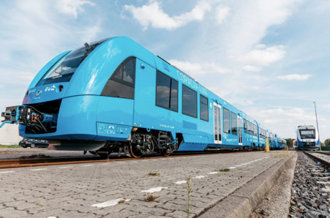
The trains are equipped with fuel cells which convert hydrogen and oxygen into electricity and can reach speeds of 140 km/h.
The new trains are fuelled at a mobile hydrogen filling station at Bremervörde. The gaseous hydrogen is pumped from a 40-foot-high steel container next to the tracks. With one tank, they can run throughout the network for the whole day or 1000km.
Another filling station is scheduled to go into operation in 2021, when Alstom will deliver a further 14 Coradia iLint trains to the network.
Alstom chief executive Henri Poupart-Lafarge says it marks a “revolution for Alstom and for the future of mobility”.
“The world’s first hydrogen fuel cell train is entering passenger service and is ready for serial production.
“The Coradia iLint heralds a new era in emission-free rail transport. It is an innovation that results from French-German teamwork and exemplifies successful cross-border cooperation.”
Dr. Bernd Althusmann, Lower Saxony’s minister of economy and transport, says he’s impressed with the results.
“The emission-free drive technology of the Coradia iLint provides a climate-friendly alternative to conventional diesel trains, particularly on non-electrified lines.
“In successfully proving the operability of the fuel cell technology in daily service, we will set the course for rail transport to be largely operated climate-friendly and emission-free in the future,” Althusmann says.

Join the conversation