
X-ray vision improves vehicle checks
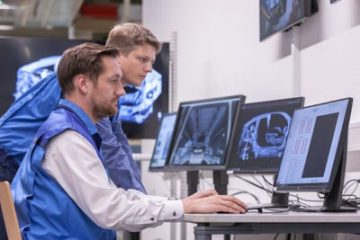
Like Superman’s x-ray vision, the BMW Group can now see through its vehicles.
The auto maker has introduced computer tomography (CT) into prototype development, production and analysis – a first in the automotive industry.
The full range of vehicles, from Mini to Rolls-Royce, can now be quality-controlled even in the early stages of development, BMW says.
It also holds the potential for automatic evaluation through artificial intelligence (AI), which BMW is researching.
Scans are performed by four robots which move around the outside of the prototype to produce several thousand cross-sectional images. These are then used for detailed examinations of innovations, new materials and bonding technologies.
Until now, vehicles have had to be dismantled for analysis, but CT allows checks to be done with the vehicle completely intact.
The new x-ray system is based in the BMW Group Pilot Plant in the Research & Innovation Centre in Munich.
“The use of this state-of-the-art computer tomography system is a major step forward for us as it will help us to improve the quality of our products even further,” production integration and pilot plant head Udo Hanle says.
“The new system allows us to examine our vehicles in a way that wouldn’t be possible with conventional, static computer tomography systems. Ultimately, this will enable us to integrate new technologies into a series vehicle even faster.”
Material and process analysis head Michael Koch says: “We’ve been using CT and X- ray scans to check vehicle parts for many years, but this latest system takes quality assurance to an entirely new level. We can now analyse our vehicles right down to micro-metre level.”
Information is obtained on objects as small as 100 micro-metres – about the width of a human hair.


Join the conversation