
Vector extends EV charger trial

Vector has extended its Auckland EV smart charging trial by a year with participants also increased from 120 to 200 people.
The trial started in 2019 and was paused during COVID lockdowns, but interim findings suggest about 90% of EV charging is at home, and that smart charging reduces peak demand with dynamic charging best.
Customers are very satisfied with smart charging methods and it doesn’t impact their ability to drive their EV when they want, Vector says.
The trial has also found that people don’t seem to change their charging time based on when electricity is cheaper – a relief for networks worried that providing pricing incentives to shift the peak load from when people get home from work will just move the peak further back.
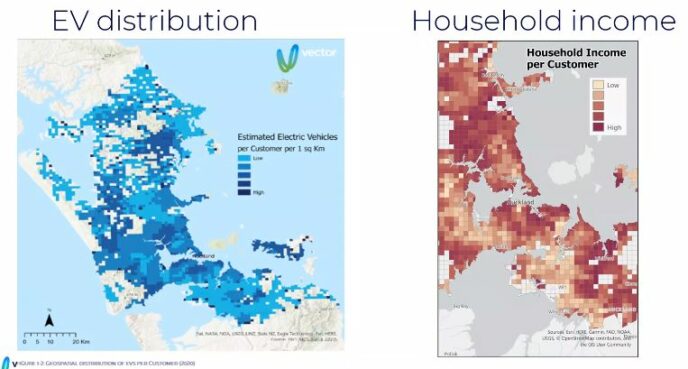
Data access (smart meters and EV registrations) will help electricity networks identify areas in the low voltage network impacted by early EV adoption.
The electricity network isn’t designed to handle a big increase in loads, such as a neighbourhood suddenly embracing EVs, Vector chief executive Simon Mackenzie explains.
He says that to prepare for the worst case scenario, networks could consider an EV charging at home at its maximum capacity right when the neighbourhood’s power lines are operating near their limits. In this it would be similar to adding two more homes to the service line for each EV.
Mackenzie says that becomes even more challenging as an entire street moves to EVs.
But smart charging can disperse the load so that not all EVs charge at the same time yet are ready for use when needed, the trial proving that.
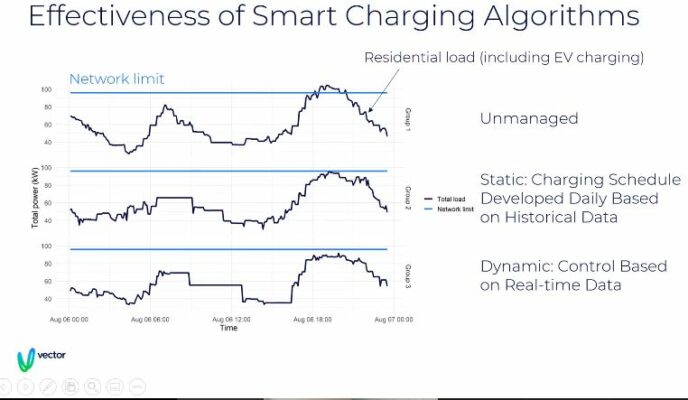
Using the “pipe in the middle of the night” rather than the network at peak times is best, according to Vector chief public policy and regulatory officer Mark Toner who adds customer satisfaction rates were almost indistinguishable between those using smart EV charging controls to those using standard EV charging.
Mackenzie points out that smart charging can help avoid power price increases through having to majorly upgrade the network to cope with the expected EV influx.

Vector is also considering how EVs can be charged by those not having off-street parking, although it notes Auckland tends to have plenty of off-street parking available.
It says dynamic smart charging needs the ability to talk to all systems involved (using artificial intelligence, machine learning, the internet and the like) to manage everything and that there’s a “real opportunity” to learn from the United Kingdom about that.

Join the conversation