
EVs surge in IEA global outlook
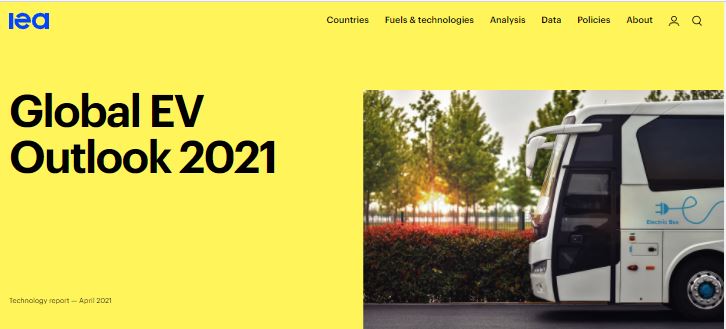
Electric cars, buses, vans and heavy trucks are expected to reach 145 million on global roads by 2030, the International Energy Agency’s (IEA) newly released Global EV Outlook 2021 report says.
Combining historical analysis with projections to 2030, the report examines key areas of interest such as EV and charging infrastructure deployment, energy use, greenhouse gas emissions and battery demand implications.
About three million new electric cars were registered in 2020, a record amount and a 41% rise compared to 2019, increasing the total number of electric cars on the road to over 10 million.
That’s in addition to around one million electric buses, vans and heavy trucks.
In the first quarter of 2021, electric car sales were almost two and a half times higher than during the same period in 2020.
For EVs to reach their full potential to mitigate carbon emissions, critical progress is required to decarbonise electricity generation, integrate EVs in power systems, build charging infrastructure and advance sustainable battery manufacturing and their recycling.
The report also features an update of the electric heavy-duty vehicle models coming onto commercial markets and due for release in coming years, and on the status of megacharger development.
Consumer spending on electric car purchases increased to US$120 billion in 2020. In parallel, governments across the world spent US$14 billion to support electric car sales, up 25% from 2019, mostly from stronger incentives in Europe.
Existing policies around the world suggest healthy growth over this decade – with EV stock across all modes (except two/three-wheelers) reaching 145 million in 2030, accounting for 7% of the road vehicle fleet.
“EV markets could be significantly larger if governments accelerate efforts to reach climate goals. In the Sustainable Development Scenario, the global EV fleet reaches 230 million vehicles in 2030 (excluding two/three-wheelers), a stock share of 12%.”
The 2020s will need to see more than just the mass adoption of electric light-duty vehicles to meet climate goals, the IEA says.
The report adds that governments will need to put in place policies to promote the roll-out of zero-emission vehicles in the medium and heavy-duty vehicle segments and the corresponding fast-charging infrastructure.
Join the conversation