
EVs dominant in Europe by 2028
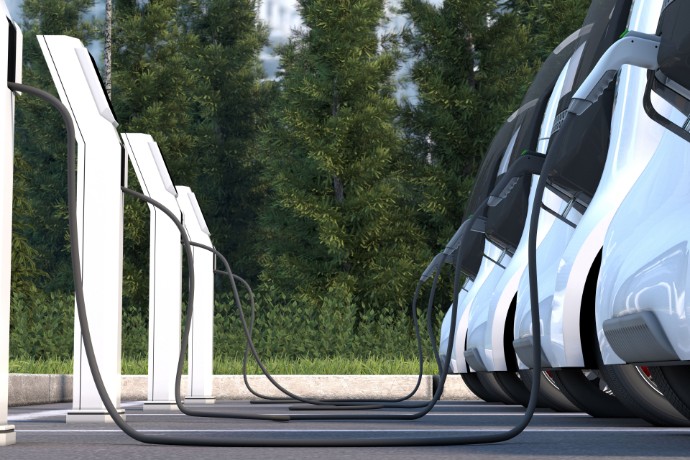
EVs will dominate vehicle sales five years sooner than expected, according to Ernst and Young (EY) analysis.
Its latest predictions show that by 2028 EV sales in Europe will surpass those of other powertrains, a trend that will be repeated in China by 2033 and in the US by 2036.
The analysis also shows that by 2045, non-EV sales will shrink to less than 1% of overall sales.
In terms of EV sales volumes, Europe is expected to lead the way until 2031, with China taking the lead from 2032 to 2050.
The figures come as EY launches the EY Mobility Lens Forecaster, an artificial intelligence (AI) powered forecast modelling tool that provides an outlook for the supply and demand of mobility products and services through 2050.
“A mix of changing consumer attitudes, ambitious climate-focused regulations and technology evolution is about to change the landscape of vehicle buying forever,” EY global advanced manufacturing and mobility leader Randall Miller says.
“While the automotive industry has begun to more fully embrace the move toward electrification, the impact of this seismic shift is arriving sooner than many expected,” he adds.
“This new outlook also has implications for governments and energy industries in terms of infrastructure and electricity generation and storage, and forward-looking organisations are already using this data to help ensure a smooth transition to this new EV-dominated market.”
As the global auto industry continues to recover from the issues it’s facing due to the COVID-19 pandemic, it will be met by a new group of car buyers.
Many people who had rejected ownership in lieu of ridesharing and public transport have reassessed in the shadow of the COVID-19 pandemic, according to EY analysis.
The EY Mobility Consumer Index published in November showed that almost one-third of non-car owners planned to buy a car in the next six months (19% plan to buy new, 12% used cars), and about half of those are millennials.
Among both current car owners and non-car owners, 30% said they’d prefer a non-internal combustion engine (ICE) vehicle for their next purchase.
The new US administration’s announcements include continuity of EV buying incentives and the development of charging infrastructure.
In Europe, incentives to purchase EVs are part of COVID-19-related relief measures in France, Germany, Spain, Italy and Austria.
The UK has announced that it will ban the sale of ICE vehicles starting from 2030.
China continues support for EVs through regulatory measures, wide product range and increasing customer demand.
From the supply perspective, automakers globally have begun to set their own twilight dates for gasoline-and diesel-powered vehicles, in favour of EVs.
EY says its EY Mobility Lens Forecaster can account for a breakthrough in autonomous vehicle technology which could shake up the landscape, creating opportunities for fleet operators and cutting into owner-operator sales.
“Similarly, policy intervention from governments can accelerate the tipping point for the powertrain mix in favour of EVs.
“Future travellers may adopt an integrated urban mobility model where users make little or no distinction between public and private transport, driving the ownership mix toward shared rather than privately owned vehicles.”
EY teams have helped a leading energy company to come up with a plan for their charging infrastructure roll-out based on expected EV penetration from the model andvEY is also working with a major UK city council to develop it as a leading EV city and to support its deployment strategy for EV charging infrastructure.
EY’s forecast is backed by a BloombergNEF study in May which picks electric cars and vans to be cheaper than fossil-fuel vehicles across Europe by 2027.



Join the conversation