
VIDEO: Clean Car system put to debate
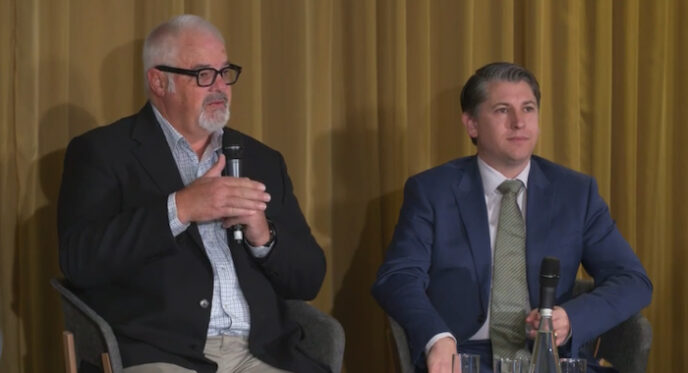

An industry panel convened by NZME’s Driven website saw a panel of industry leaders and experts pressure test the government’s Clean Car plans.
Hosted by Newstalk ZB Drive Host Heather du Plessis-Allan, the panel included transport minister Michael Wood, Motor Industry Association chief executive David Crawford, VIA chief executive David Vinsen, Drive Electric chair Mark Gilbert, Mercury Energy gm sustainability Lucie Drummond and KPMG director of infrastructure and government advisory Stephanie Ward.

The panel came on the day incentives for electric vehicles and plug-in hybrids commenced.
The debate opened with a discussion around how while the industry welcomed moves to support a shift to low-emission vehicles, the timeline was in the view of the trade too short.
David Crawford explained his members were working furiously on getting supply, difficult to do in the time available.
Wood noted that was the point.

“That is one of the points of this policy that we have some positive incentives between the clean car standard and clean car discount for importers to go back and try and get that cleaner stock into New Zealand. We have not done a very good job of that, up until this point.”
Wood asserted New Zealand was at risk of becoming a dumping ground for poor-emitting vehicles.
Crawford refuted this.
“We are not a dumping ground, we work on derived demand, so when people buy vehicles we go back to our manufacturers and say that is what is being bought,” he explained.
“So we have supported the introduction of both the clean car standard and feebate scheme, but what we asked for were sensible timelines to achieve it so that the costs didn’t blow out, and a big point of disagreement is not that they have been brought in, but that the timeline for the clean car standard is a 40% reduction in emissions by 2025, without the opportunity for a model cycle swap.”
“So unfortunately the cost of bringing a vehicle in is going to go up – that is the only way we can offset the charge.”
Drive electric’s Mark Gilbert questioned how many farmer and trade ute purchases each year ‘were actually genuine, so we could get an idea of the size of the issue.’
Crawford broke down the numbers to suggest 70% of ute sales were into trades, noting it was hard to put a finger on if the rest were for legitimate uses.
VIA chief executive David Vinsen noted the discount is already warping the market, with higher competition at auction for electric vehicles driving prices for those up, and predicted in the long run this would mean demand and the price for dirtier vehicles would come down.
The minister said this is not how they see it playing out in the long run, with the scheme opening up next year to hybrids, which are in his opinion in plentiful supply in Japan.
The nuts and bolts of how many flowed in the system was discussed.
Vinsen called for some kind of promissory note system for the incentives so that they can be paid to the dealer as part of the sales process to simplify things. The minister says they preferred the method used as it gave clarity for the purchaser – but they remain open minded.
Crawford hoped the government would review how the system works prior to the full implementation next year.
Stephanie Ward of KPMG called for investment in lines capacity.
Lucie Drummond of Mercury Energy quashed suggestions that the network was unable to charge electric vehicles, noting even if the number of vehicles was to go up by four times, it would still only account for 0.6% of electricity demand.
She also noted smart chargers would allow the network to be managed.
The discussion moved to the Clean Car Standard, with Mark Gilbert incorrectly suggesting there was a long timeframe for manufacturers to meet the 105gram emissions average.
“The emissions standards come into effect from 2025 so that is quite a long time in any business. And as the minister said we are late to the party. I would have thought a lot of the car manufacturers would be saying when are you guys going to get moving because we are producing that cars that can meet that 105 limit.”
“The car companies have two options if you don’t make it, one is you penalise the shareholders with returns or you pass it on to the customer. They would prefer to do neither, so find a way to do it.”
That assertion was heavily dismissed by Crawford.
“I am sorry Mark, you have got that so horribly wrong. First of all the impact of the clean car standard bites from 1 January, 2023. And you can’t just say because Europe are doing 105grams we can do it, there is a whole range of other market factors in production, supply and demand to turn around.”
“What I can say is change is coming. Will it come in time for cars? There is a lot of things coming in cars, lots of things happening in vans, but I am not expecting to see wholesale change in utes until sometime between 2025 and 2030.”
“We want to sell as many electric vehicles as we can. We just can’t get them. And when we do get them we get allocated 80 of that, and 120 there. The whole world wants them.”
In a closing note, Toyota New Zealand chief executive Neeraj Lala welcomed that hybrids had been brought into the issue, but called for clarity over communications – noting the public felt hybrids were already included, creating confusion.



Join the conversation