
Government speeds up heavy fleet electrification
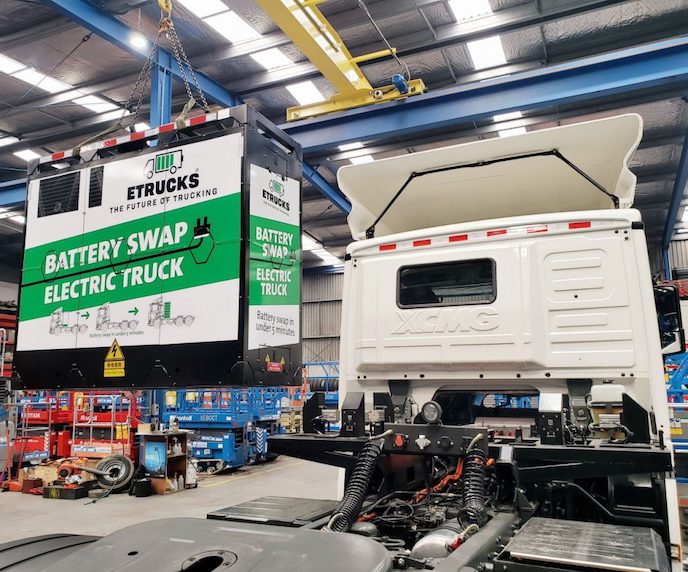
The government has announced it will co-fund a battery swapping station for electric trucks which is one of the projects named in round 10 of the Low Emission Vehicles Contestable Fund.
In total, 22 projects will receive $6.5m with this round’s focus on investment in heavy transport and the public charging network. Recipients will contribute an additional $12.8m.
Round 10 includes three technology/battery testing projects, seven heavy electric trucks projects, 11 charging infrastructure projects, and one van project.
The 11 charging infrastructure projects include Alpine Energy, Z Energy, SIXT New Zealand and Goodman Property Trust each installing high speed chargers (ranging from 120 to 150kW) and ChargeNet will deliver six 300kW hyper chargers in three separate projects: two each (with multiple charging ports) in Wellington, Queenstown and Taupiri.
Wellington City Council and Hutt City Council will each install a network of interoperable neighbourhood chargers.
“So far, we only have a few dozen electric trucks on the road but innovations like battery swapping stations for E trucks will save valuable time for operators,” Energy and Resources Minister Dr Megan Woods says.
“It will mean they’ll be able to quickly swap in a fully charged battery to continue their journey, leaving the depleted battery for recharging later and at off-peak times when electricity is cheaper,”
“I’m confident the E truck project will demonstrate the potential for further electrification of the heavy fleet.”
Woods announced the round 10 recipients at an event to launch a round 9 project; an EV and e-bike sharing pilot at the Ōtautahi Community Housing Trust, which is giving its tenants the opportunity to share, rather than own transport.
“Sometimes innovation isn’t just about the technology itself, but how it can be used. Community projects where people can use an EV or e-bike, without having to buy them, is a great example of this,” Woods says.
Woods says the round 10 projects come from the final round of the LEVCF in its present form, as the government will progressively increase the size and scope of the LEVCF to $25 million per year by 2023/24.
“Expanding the scope of the fund will not only further help us tackle transport’s climate impact, it will also encourage more growth in the low-emissions technology sector,” Woods says.
Reflecting the change in scope, it will be renamed the Low Emissions Transport Fund (LETF).
Details of the LETF will be announced by October.



Join the conversation