
Hyundai offers carbon neutral commitment
Hyundai Motor will stop selling internal combustion engine (ICE) vehicles in Europe from 2035 amid a commitment to achieve carbon neutrality by 2045.
It made the carbon neutral promise at the IAA Mobility 2021 event in Munich from September 6-12, adding that its holistic approach focuses on clean mobility, next-generation platforms and green energy.
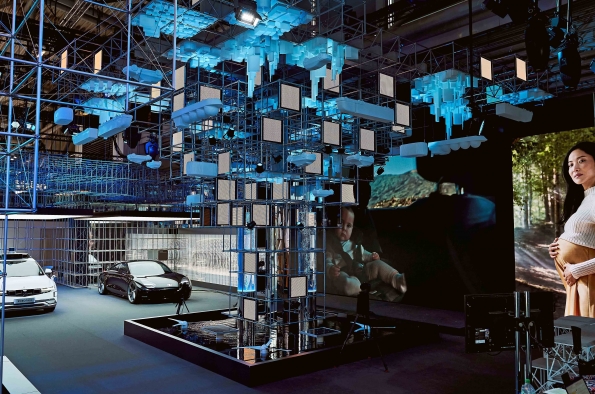
At the IAA, Hyundai showcases concepts for an upcoming BEV model, an electric robotaxi, and has artistic displays on the hydrogen value chain for visitors and digital attendees
“Under our company’s vision, Progress for Humanity, Hyundai Motor is determined to do the right thing for the world,” president and chief executive Jaehoon (Jay) Chang says.
“Climate change is an undeniable challenge that needs everyone’s utmost and urgent attention,” he adds.
“Hyundai Motor commits to become carbon neutral in its global products and operations by 2045, and we will make investments in cleaner transportation and greener energy solutions to achieve a better and more sustainable future for all.”
IAA visitors can reach the event’s various locations via Hyundai’s Blue Lane service, offering the opportunity to experience the brand’s latest clean mobility vehicles, including Ioniq 5, Nexo, Kona Electric, and the Elec City Fuel Cell bus.
Hyundai’s demonstration at IAA is available digitally. The press conference video is uploaded on Hyundai Motor’s Worldwide YouTube channel.
“With a new location and a live-digital hybrid format, this year’s IAA is very different from previous events, Hyundai Motor Europe president and chief executive Michael Cole says.
“We are excited to be sharing our future company vision, which goes beyond automotive mobility. On top of this, we are outlining our roadmap to enable a carbon-neutral society, which is imperative as the future of the planet is at stake.”
By 2030, Hyundai aims to secure 30% of its global vehicles sales with zero-emission vehicles (ZEVs), and by 2040 the company expects that battery electric vehicles (BEVs) and fuel cell electric vehicles (FCEVs) will account for 80% of its total fleet sales.
Hyundai is also working with various energy partners to run pilot projects to commercially reuse second life EV batteries and is scheduled to test a small size application of battery storage in Germany next year.
More details on Hyundai Motor’s pathways to a carbon-neutral future can be found here in its white paper, starting September 7.



Join the conversation