
Zeekr 7X tops EV sales in steady February market
Electric and hybrid vehicles continued to grow their presence in New Zealand’s new vehicle market in February as overall registrations increased year-on-year, according to Motor Industry Association (MIA) data.
Battery electric vehicles (BEVs) accounted for 6.6% of total registrations in February with 675 units, while plug-in hybrids (PHEVs) represented 6.9% with 707 units. Hybrid vehicles remained the largest electrified category with 2,405 registrations, or 23.6% of the market.
Internal combustion engine vehicles still made up the majority of sales, accounting for 62.8% of registrations.
Within the light passenger vehicle segment specifically, electrification remains more prominent. BEVs accounted for 8.9% of light passenger registrations in February, plug-in hybrids 7.8%, and non-plug-in hybrids 30.8%, while internal combustion vehicles made up 52.5%.
The MIA’s model-level data highlights strong competition across electrified segments.
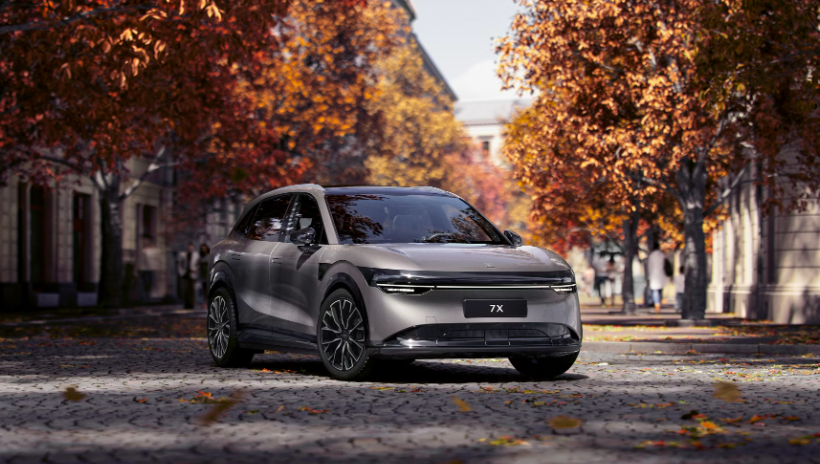
Among battery electric passenger vehicles, the Zeekr 7X was the top-selling model in February with 71 registrations, followed by the MG ZS with 51. BYD’s Atto 1 and Atto 2 models both recorded 38 registrations, while the Kia EV5 rounded out the top five with 36 units.
In the plug-in hybrid segment, the BYD Sealion 5 led February sales with 92 registrations. The Mitsubishi Eclipse Cross followed with 49 units, ahead of the Jaecoo J7 with 41. The BYD Sealion 6 recorded 39 registrations, while the BYD Sealion 8 completed the top five with 35 units.
Hybrid models continued to dominate electrified sales volumes overall. The Toyota RAV4 was the top hybrid in February with 369 registrations, followed by the Toyota Corolla Cross with 151 and the Kia Sportage with 146. The Toyota Yaris Cross recorded 132 registrations, while the GWM Haval H6 completed the top five with 99 units.
Overall, steady underlying demand and stable but competitive trading conditions supported moderate growth in the market during February.
“Both the monthly and year to date figures show moderate growth compared with 2025, with light passenger vehicles continuing to account for around seventy percent of registrations. While heavy commercial volumes remain slightly below last year on a year-to-date basis, the February lift is encouraging. The industry continues to respond to stable but competitive trading conditions,” MIA chief executive Aimee Wiley says.
A total of 10,193 new vehicles were registered in February, up 405 units or 4.1% on the same month last year. Year-to-date registrations reached 21,970 units, an increase of 6.5% compared with the same period in 2025.
Light passenger vehicles, including SUVs, remained the backbone of the market with 7,138 registrations in February, representing 70% of total sales. Light commercial registrations rose 9.2% year-on-year to 2,612 units, while heavy commercial registrations increased 11% to 443 units.
From a buyer perspective, business demand continued to dominate the market, accounting for 55.1% of February registrations, followed by private buyers at 35.9%. Rental registrations accounted for 6.6% of the market, while government purchases represented 2.4%.
Broader economic forecasts point to gradual improvement in 2026 following a subdued period last year, with interest rates and business confidence indicators showing signs of stabilisation.
The MIA says vehicle demand continues to reflect replacement cycles and business investment decisions rather than rapid expansion, with the market showing orderly growth rather than sharp acceleration.
Join the conversation