
A pioneer of electromobility
Mercedes-Benz is heading down the electromobility road at a rapid pace with its EQ
brand.
It says the vehicles are designed with the latest developments in areas such as electric motors, power electronics and rechargeable battery systems because these technologies have progressed in leaps and bounds in recent years.
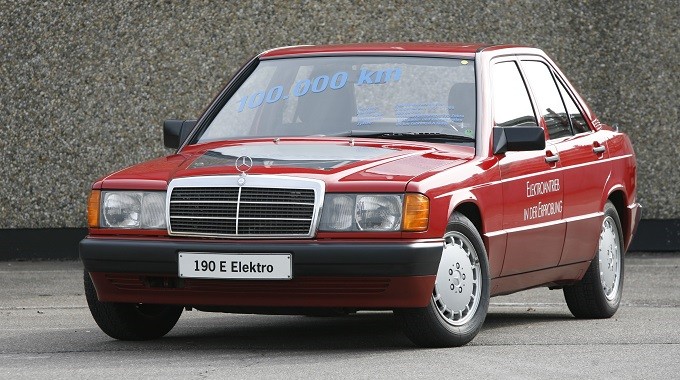
However, much of that progress would not have been possible without the testing that went with a Mercedes-Benz model 190 (W 201) converted to electric drive first displayed at the Hanover Fair in May 1990.
“In this way, the Mercedes 190, which in terms of length and weight comes closest to the requirements of an electric vehicle, is an ideal battery test vehicle,” a Mercedes-Benz brochure issued then says.

“The main objective is to assess the functional suitability of all the components in realistic situations with all the vibrations, accelerations and temperature fluctuations experienced in everyday operation.”
The electric 190s were used to test different drive configurations and battery systems. The energy storage devices tested were mainly sodium-nickel chloride or sodium-sulphur high-energy batteries which had a significantly higher energy density than classic lead batteries. However, the working temperature of both systems was around 300 degrees Celsius.
in March 1991, Mercedes-Benz displayed a more advanced vehicle at the Geneva Motor Show.

Its press kit explained the 190 with electric drive in detail and listed two important benefits: “The car is still a fully-fledged five-seater with almost unchanged effective space and with tried-and-tested Mercedes-Benz safety features.”
Each of the rear wheels of the vehicle presented in Geneva was powered by its own DC motor energised by permanent magnets with a peak power of 16kW each, so the total power output was 32kW. Energy was supplied by a sodium-nickel chloride battery, and regenerative braking returned energy to the power pack during braking actions.
One advantage of the concept was the elimination of weight-intensive mechanical components, so the additional weight compared to a series-production vehicle with a combustion engine was only 200kg.
The issue of electric cars experienced an upswing at that time following laws passed in California, for example, to introduce zero emission vehicles.
From 1992, some of the results were seen on the German Baltic Sea coast where a largescale field trial was held on Rügen island and continued through to 1996.
The German government put up 60 million deutschmarks.
About 60 passenger cars and vans of several brands were involved, with the aim of testing EVs and energy systems, including their batteries, in everyday practice.
Mercedes-Benz sent 10 W 201 model series saloon cars, which had previously been fitted by hand with drive components in various electric motor and battery combinations.
Special recharging stations using solar collectors were available during the field test as only electricity from renewable sources can be considered completely CO2 neutral.
Taxi drivers were among the test participants, along with others who used them in everyday life, some clocking up 100,000km in one year.
“The results provide new insights into battery service life, the number of possible discharge and charge cycles, range, energy consumption and reliability,” the Mercedes-Benz brochure says.
In following years Mercedes-Benz applied the electric drive concept to other passenger cars.
So why are EVs only now becoming established?
Battery service life, range, recycling, charging infrastructure and vehicle price are quoted as just some of the keywords in a Mercedes-Benz press release from spring 1991 as challenges faced by e-mobility on the way to series production.
Many of the answers to these questions have only become available recently.
Projects like the 190 with electric drive helped provide these answers.
All the knowledge gleaned by the experts in the 1990s has contributed to the comprehensive knowledge pool of vehicle development on which engineers draw in developing today’s vehicles.
Some engineers that worked on the W 201 with electric drive are still active in the company’s EV development.

Join the conversation